
“the OPP (Optical Precision Port) is Seacam’s water-corrected alternative to a dome port. And to get straight to what you want to know – I am happy to report it works as advertised/hoped and with a custom port adapter could be used with any housing.”
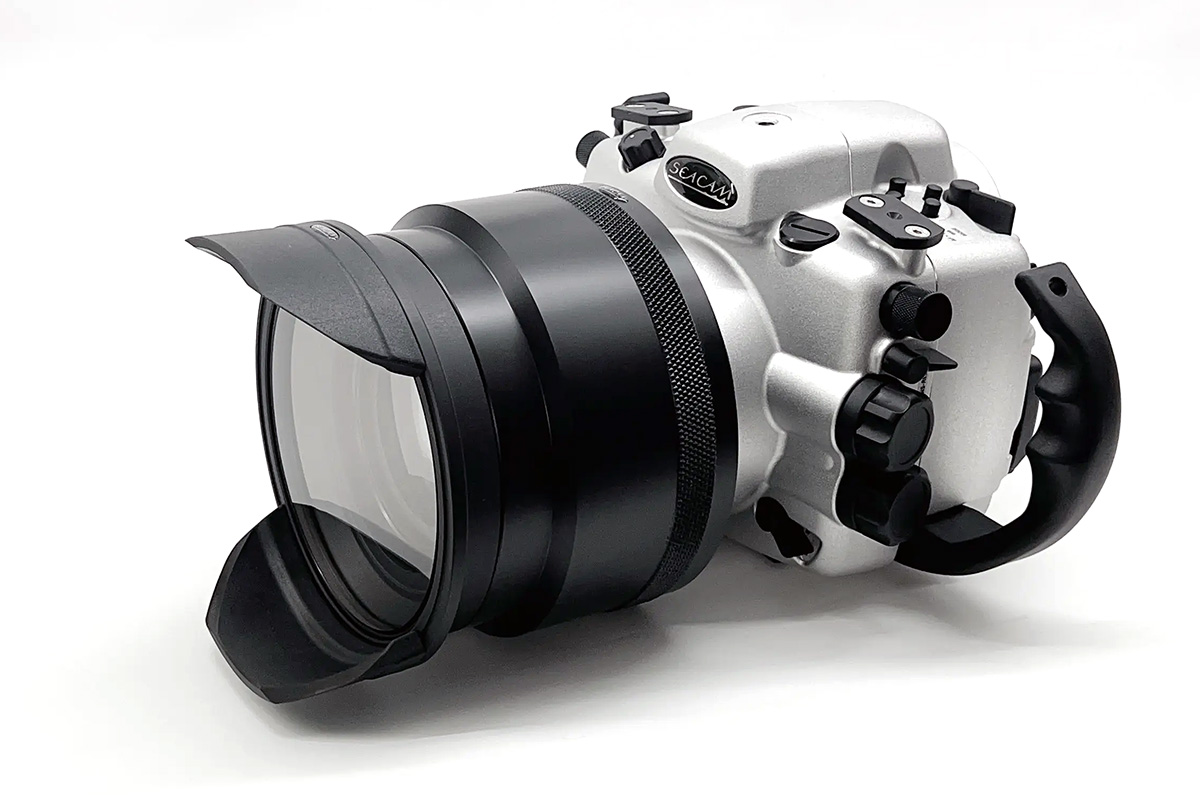
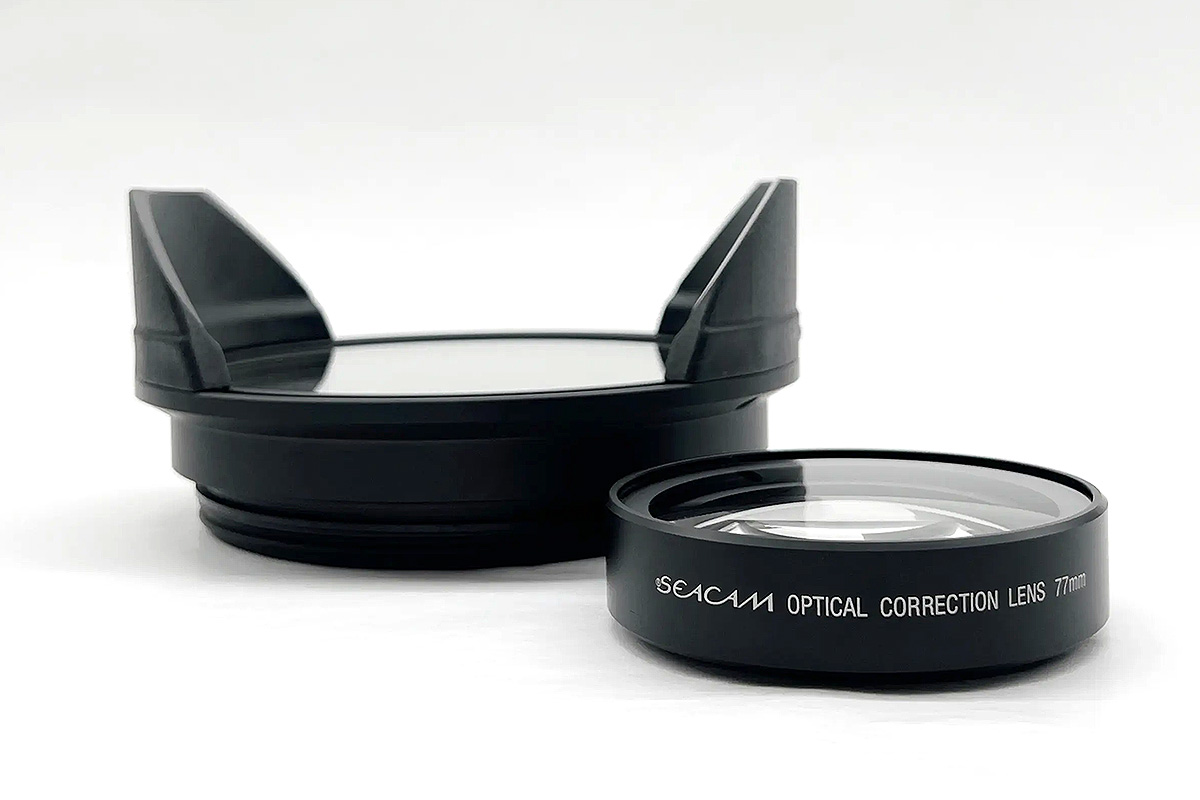
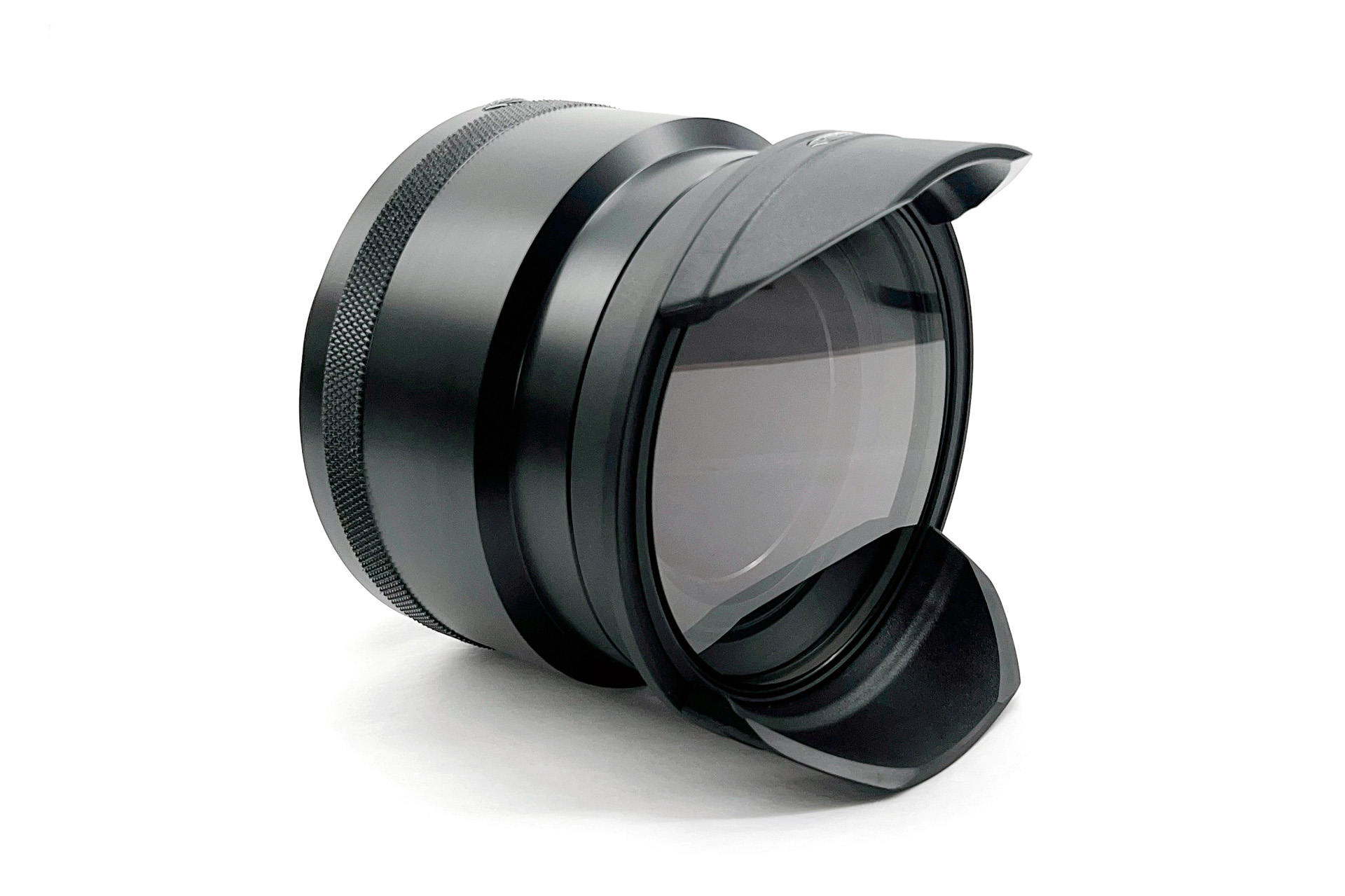
Seacam’s Optical Precision Port (OPP) converts your 16-35mm into a water corrected lens. It consists of two lenses: the main Frontport and the Correction lens that mounts to the camera lens inside the housing. A buoyancy collar port extension aids underwater handling of these large optics.
The OPP (Optical Precision Port) is Seacam’s water-corrected alternative to a dome port. It is a two-lens system, consisting of a thick Frontport (actually a lens, which is flat on the outside, but concave on the inside) and matched Correction lens (a positive lens), that screws on the front of the camera’s lens. This article is a review of the port as well as giving you all the background on this style of port, in general.
But should you be adding the 5000 Euro OPP to your shopping list? Whether this optic is for you will depend on a number of personal factors. Such as how much you shoot lenses like the 16-35mm, whether you prefer the rectilinear look over fisheye, how much you need to shoot with more open apertures, and how much image quality you truly need from your files.
The OPP has limitations. It retails for a not insignificant amount and currently is only approved for the Nikon (F mount) 16-35mm lens. I would fully expect the similar Canon, Sony and Nikon Z lenses to be supported very soon, but within each system it is best thought of as specific solution for a specific wide rectilinear zoom. If you want to use the OPP, then you have to choose a lens it works with. Wider lenses like fisheyes and wider rectilinear lenses are not compatible, in part because they cannot accept the correction lens.
Deciding whether the OPP is right for you also involves understanding what water-corrected optics are designed to achieve and if this is valuable for the photos you take and what you do with them. I hope you enjoy this wide ranging article, written both for those thinking of buying and for those trying to understand fits into our choices.
Seacam’s OPP, which shares its acronym (although not what the abbreviation stands for) with Naughty By Nature’s 90s hip hop song, is actually based on something properly old school – the Ivanoff Corrector Port. Patented in 1953 by French Professor Alexandre Ivanoff, this is a two-lens corrector (flat-concave port and a matched convex lens that attached to the camera lens) that makes a land lens “water contact”, or in other words fully corrected for underwater use.
The Corrector Port maintains the angle of view of the original lens, just as a dome port does, but without creating the curved/domed field of focus. This curved field isn’t a problem in the centre of the image, but causes the image to become increasingly soft, seen in our pictures as blurred details into the corners of the frame. We correct this characteristic of all dome ports by closing our aperture – bringing the curved field of focus within the increased depth of field. Therefore, the most obvious advantage of Ivanoff style port is that it preserves excellent image quality into the edges and corners of the frame, which is particularly noticeable (compared with a dome) at more open apertures. In addition, if the corrector is manufactured to high quality, with carefully selected and matched optics, the design will also correct other issues like chromatic aberration.
Why Haven’t You Heard Of These Correctors?
Ivanoff Correctors have been around a long time, but have never been widespread for a few reasons:
• Most importantly, they are more expensive than domes, being made of multiple elements of ground glass. The OPP sells a little more than twice Seacam’s superdome, but I would argue that given the R&D and production costs compared to a dome, it is good value (comparatively to a simple dome). But ultimately it is the same lens behind it and compositionally takes the same photos.
• Second, for much of the history of underwater photography there have been bigger fish to fry for improving our shots (images were held back by technique, film stock, autofocus performance, strobe performance, ISO performance, sensor resolution etc). For example, in the era of the Nikonos RS camera, everyone respected the optical quality of the RS’s 13mm fisheye, but like most people, I chose to stop using the RS and use a more modern housed Nikon and the 16mm fisheye with a dome, not for optical quality, but for the greater camera capabilities. The underwater photography market has only become focused on optics as the other limits on our photos have been addresses and standards have become more exacting. It is why I call the last 10-15 years the Optical Revolution in underwater photography, carrying on from the Digital Revolution of the decade before.
• Third, although Ivanoff-Corrector ports were sold from the late 1950s, underwater photography was at that time a very niche activity. The Nikonos viewfinder cameras (the more basic predecessors of the RS) increased its popularity, and were swiftly accompanied from the late 1960s by the Nikonos 15mm wide angle – a fully corrected underwater lens, which made the Ivanoff look bulky and unecessary for anyone chasing the ultimate image quality.
• And finally, the Ivanoff-Corrector works its magic on wide rectilinear lenses (non-fisheye). Underwater photographers also learned that fisheyes not only work well behind dome ports – as their barrel distortion helps de-emphasis any corner of the frame issues, but also their barrel distortion combined with the ultra-wide view of fisheyes actually helps to create those high impact, forced perspective shots. Basically, underwater fisheye shots look good.
All that said, Ivanoff-Correctors have cropped up periodically in underwater photography. Most of Rebikoff’s products ended up on specialist survey or filming cameras, while smaller units appeared on several video housings in the 1990s and 2000s. The only one I have shot seriously, and possibly the only one previously produced specifically for high quality artistic still photography is two-lens design from Carl Zeiss made for the Hasselblad medium format Super Wide Camera in the 1970/80s…
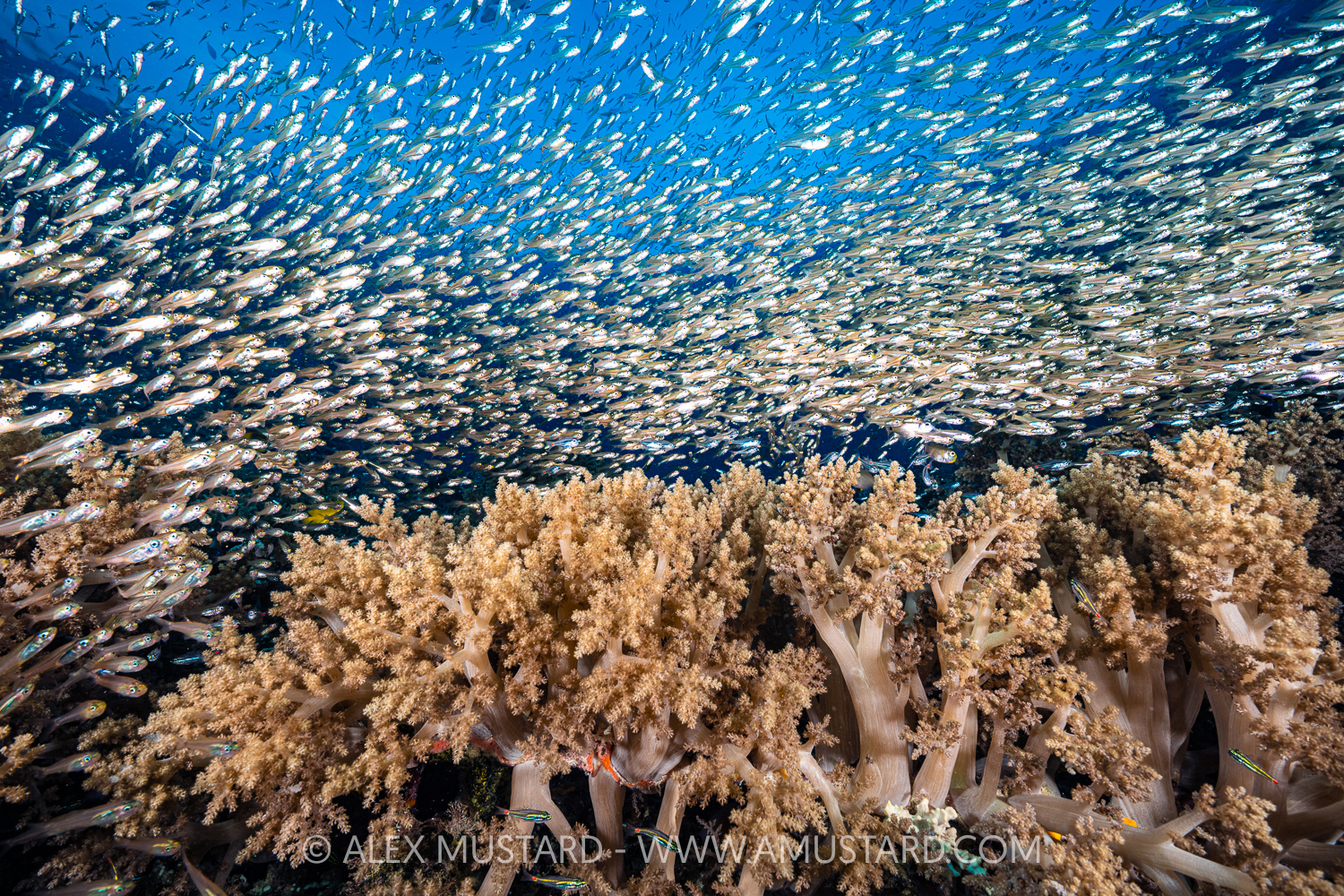
The OPP delivers excellent detail right across the frame. 16-35mm @ 16mm. 1/125th @ f/13, ISO 400
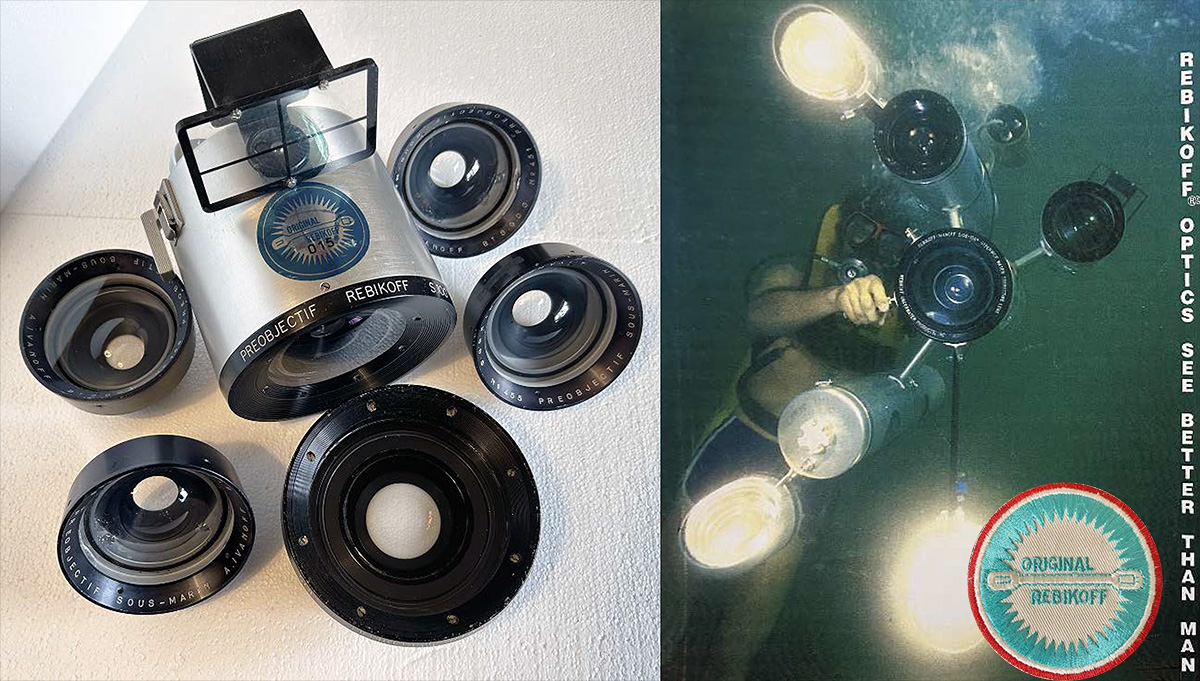
Ivanoff Correctors produced by Dimitri Rebikoff. Images courtesy of Doug Hankin.
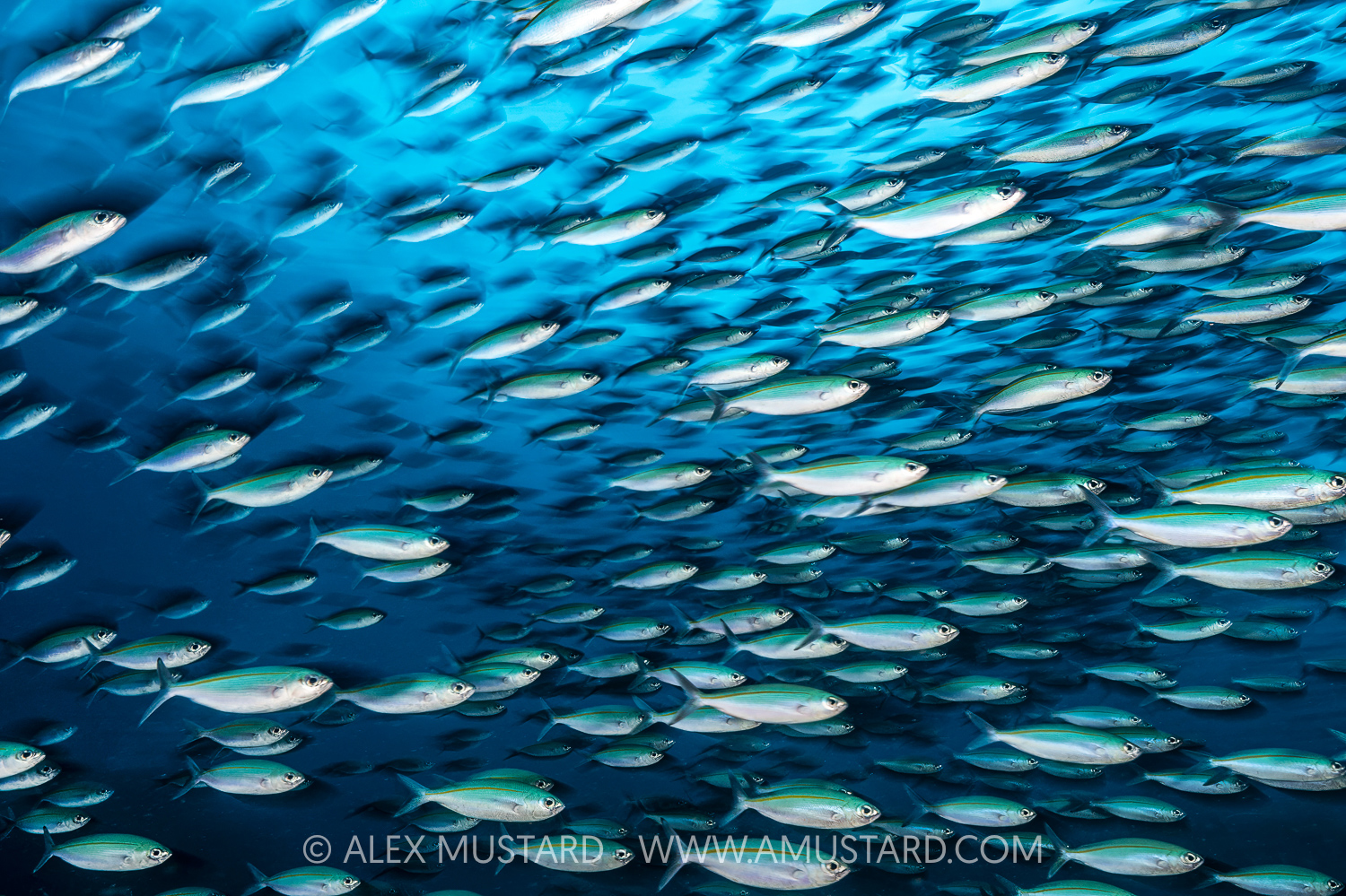
The OPP works well but it is more expensive than a dome. 16-35mm. 1/25th @ f/18, ISO 320
“Ivanoff Correctors have always worked, but their expense, weight and photographers having other imaging priorities have limited their popularity.”
In the late 1990s, I was gifted a medium format Hasselblad housing and it came with the Carl Zeiss made Ivanoff-Corrector port. It was already a long-outdated system, but I got it running again and enjoyed the diversion, experience and the challenges of shooting medium format film underwater with a fully mechanical camera.
Jump forward to 2014, digital camera technology was mature and megapixels continued to climb. This prompted several serious underwater photographers to get interested in further improving the quality of their images with underwater corrected optics. I got hooked when I shot the Nikonos RS 13mm, converted by Seacam to work on a Nikon digital SLR. Some shots were transformed, while in others the gains were only small. But the advantage of a water corrected optic were there in every image I took and I wanted more! (Ironically, the Nikonos RS 13mm, that I had discarded with my Nikonos RS in the 1990s, has been my most used lens since 2014, first on my Nikon SLRs, and then thanks to Isaac Szabo’s ingenious conversion, on my Sony mirrorless cameras.) I was also impressed with what I was seeing from Nauticam’s WWL wet lens, but this wasn’t compatible with SLRs, so myself and others pushed Nauticam to make port version that could be used on SLRs. I tested the prototype called the WWL-Dry lens in 2016, which would be refined and released in 2017 as the WACP-1.
Before this, though, wanting an accompaniment for my Nikonos 13mm, I returned to the Ivanoff-Corrector from my Hasselblad. I had this adapted to my Subal housing and got it working well in 2015. I had hoped to be able to use it with my Nikon 16-35mm, but with this lens my tests showed it was actually optically worse than a dome. I even commissioned a new Correction lens, but this didn’t solve the issue. But the set up worked fantastically well with the smaller Nikon 20mm lens, which I think was, fortuitously, a better match with the Correction lens. I shot this set up extensively, including using it to take a well-known image of a cormorant hunting beneath an oil rig, awarded in the Wildlife Photographer of the Year 2016, which has also gone on to be featured in their “best of” books Unforgettable Underwater Photography and 60 Years of The Wildlife Photographer of the Year. Another image I shot with that setup has been used as the calling-card image for the BBC’s forthcoming Blue Planet III series.
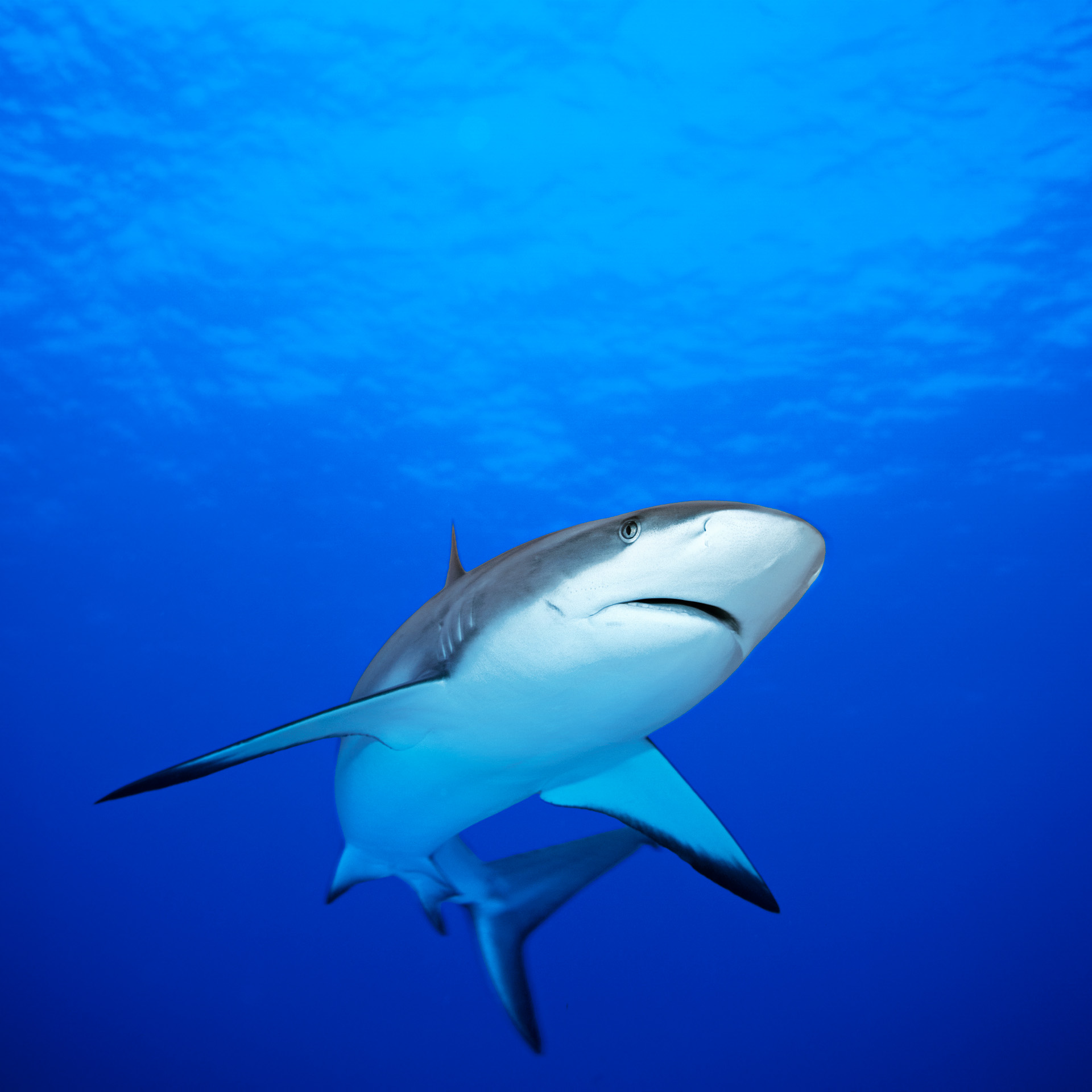
A reef shark photographed with my Hasselblad housing, with the SWC and Ivanoff Corrector port. Hasselblads take square photos!
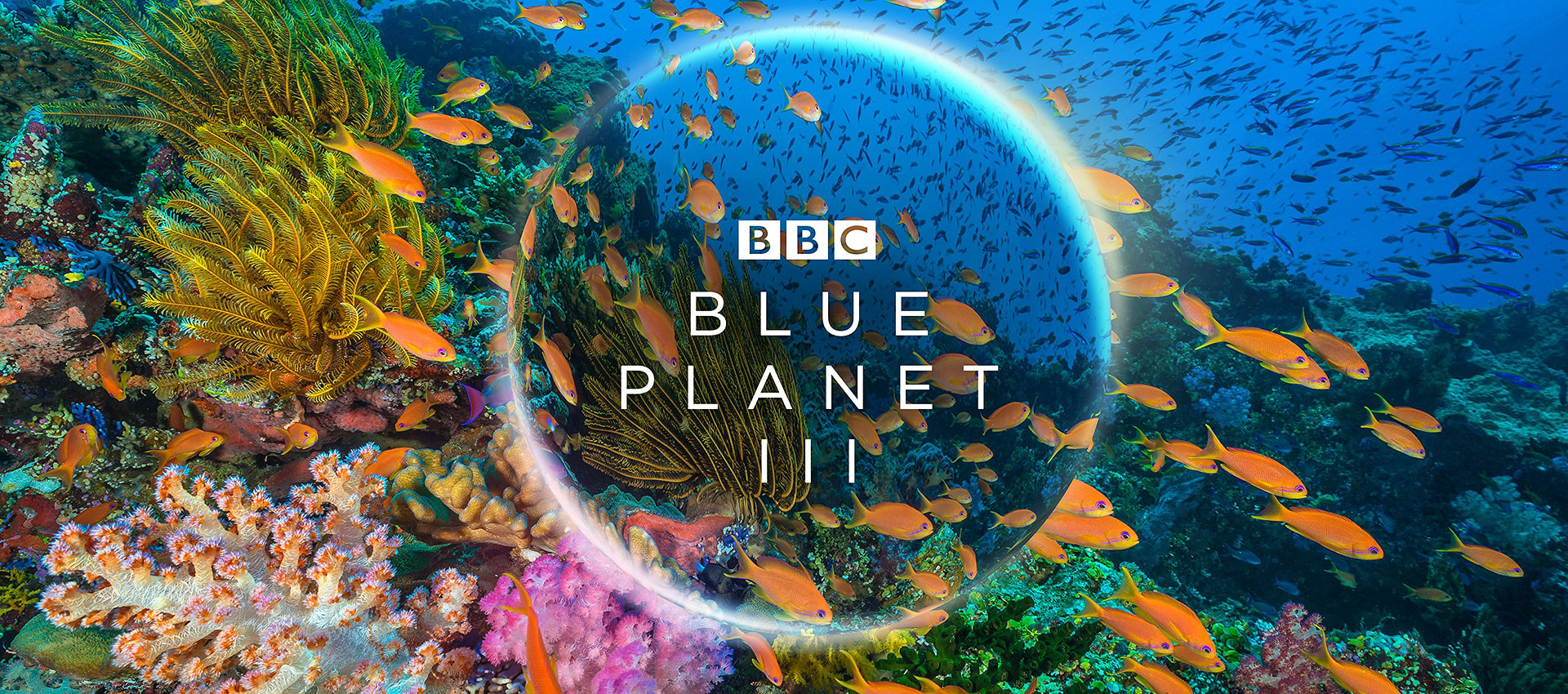
Blue Planet III promotional image taken with Ivanoff port and 20mm lens.
The Seacam OPP was announced at DEMA 2025. As an Ivanoff convert, I was particularly excited by this product, and curious to see what a modern design could deliver. I was also really pleased to see Seacam go in their own direction with the OPP, adding a new option to the market. Too often underwater manufacturers simply copy each other. Nauticam created and have dominated Corrector Port market over the last decade, and it is good for us all that Seacam didn’t simply make a silver WACP.
However, I had concerns. The early sample images released on the Seacam website in 2025 along with the OPP were poor. While they were strong photos, they did not show the exemplary edge of the frame sharpness that the OPP should deliver. And given that superior edge to edge optical performance is the raison d’ être of the Ivanoff, I was worried. Furthermore, my own struggles to get the 16-35mm to perform added to my concern about this 5000 Euro solution.
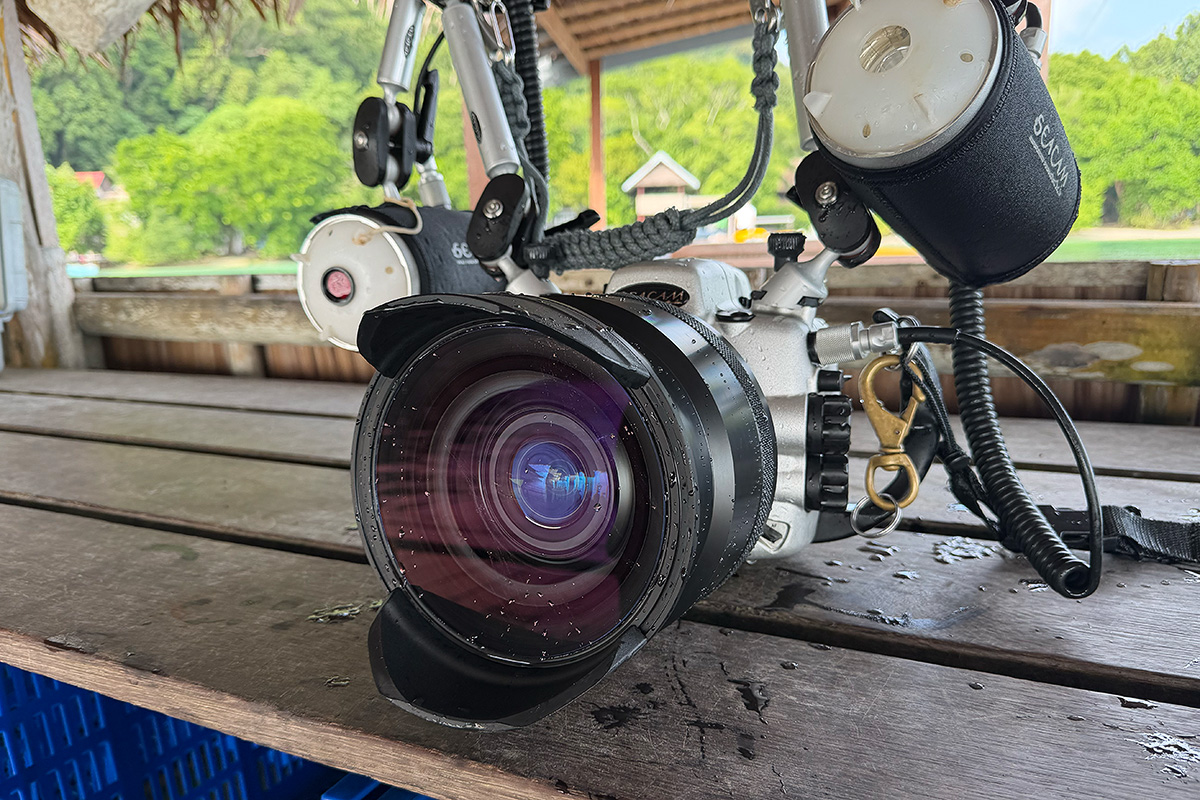
It is great for our community that Seacam has created a unique product in the OPP. And it is exciting to see how and Ivanoff Corrector designed by computer and built to modern standards performs.
Fortunately, the chance to try the production version of the OPP came up in March 2026, when I was running a workshop in Raja Ampat, Indonesia, that included 6 days at the fabulous Sorido Bay Resort. Not only is Sorido Bay, on Kri Island, a wonderful place to stay, right at the heart of the famous Dampier Strait, it is also the home of the Raja Ampat Seacam Center. The RASC provides rental gear, the latest Seacam products and at key times during the year, Seacam Ambassadors on site to help you. Our group had the pleasure of Don Silcock for company, who had done most of the development diving with the OPP. Don kindly lent me his Z8, 16-35mm, Seacam housing, OPP and Seacam 160 strobes for a few test dives.
The OPP’s two lenses are decent chunks of optical glass, but the system is not heavy in the water, and well balanced with Seacam’s buoyancy port extension. Seacam highlights on their website that the OPP is travel friendly – not that heavy (3 kg total), nor big, and being modular, easier to pack. Although, on many trips you are likely to be bringing the OPP as an extra, because there is still a need for a dome port for other lenses and for split level shooting.
The fact that the OPP is considerably smaller than a superdome in diameter, and focuses close, definitely allows you to shoot smaller subjects and I found it impressively versatile underwater, able to shoot bigger scenes down to portraits of medium-sized fish. That said, the versatility was hampered by Seacam’s zoom control knob, which is in an annoyingly congested area of the housing (the electronic flash synch cable definitely gets in the way of your hand) and needs opposing fingers (rather than a single finger) to turn.
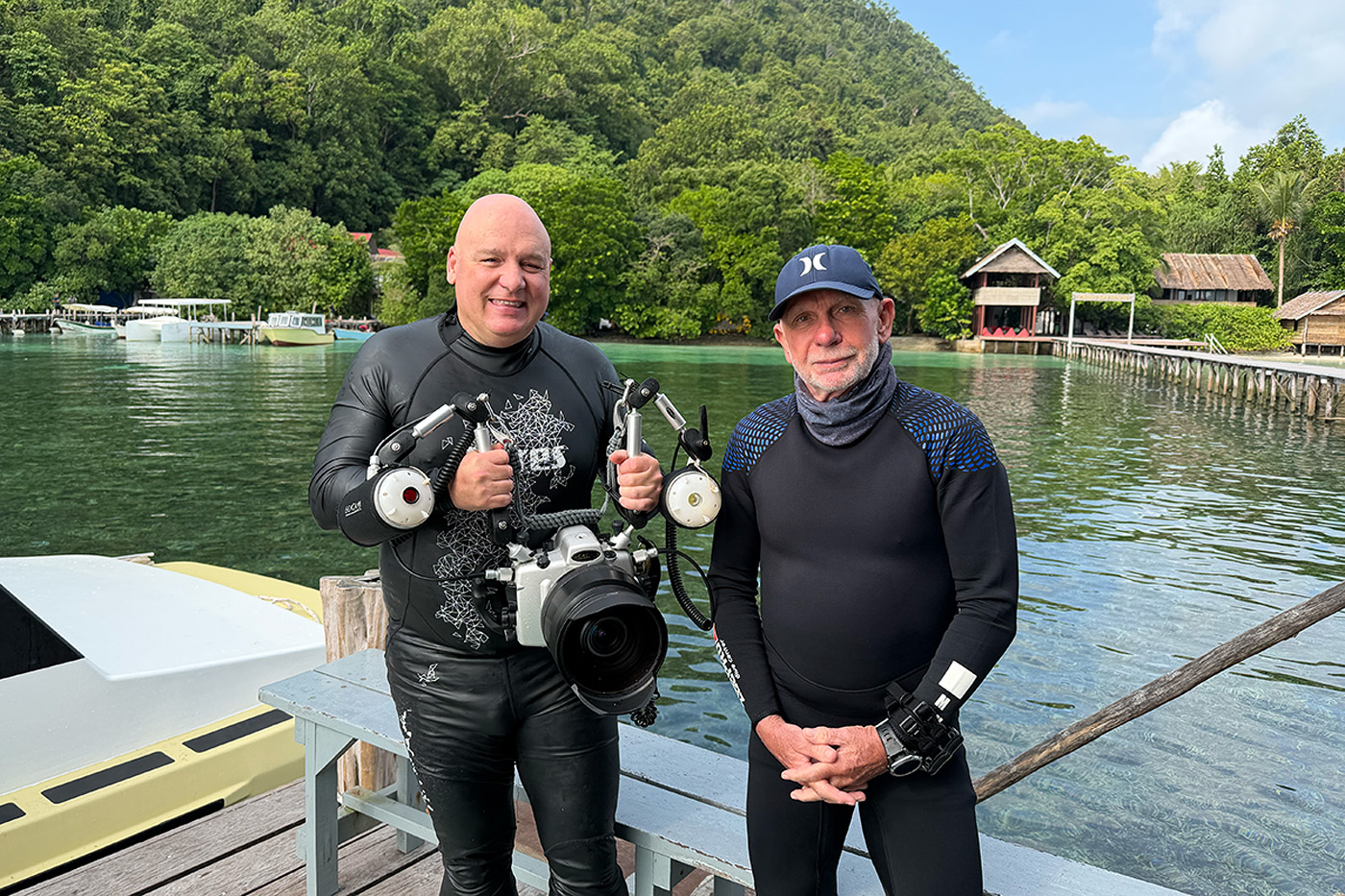
Alex happy to have his hands on Don’s OPP. Don less happy to be trusting his baby to someone else.
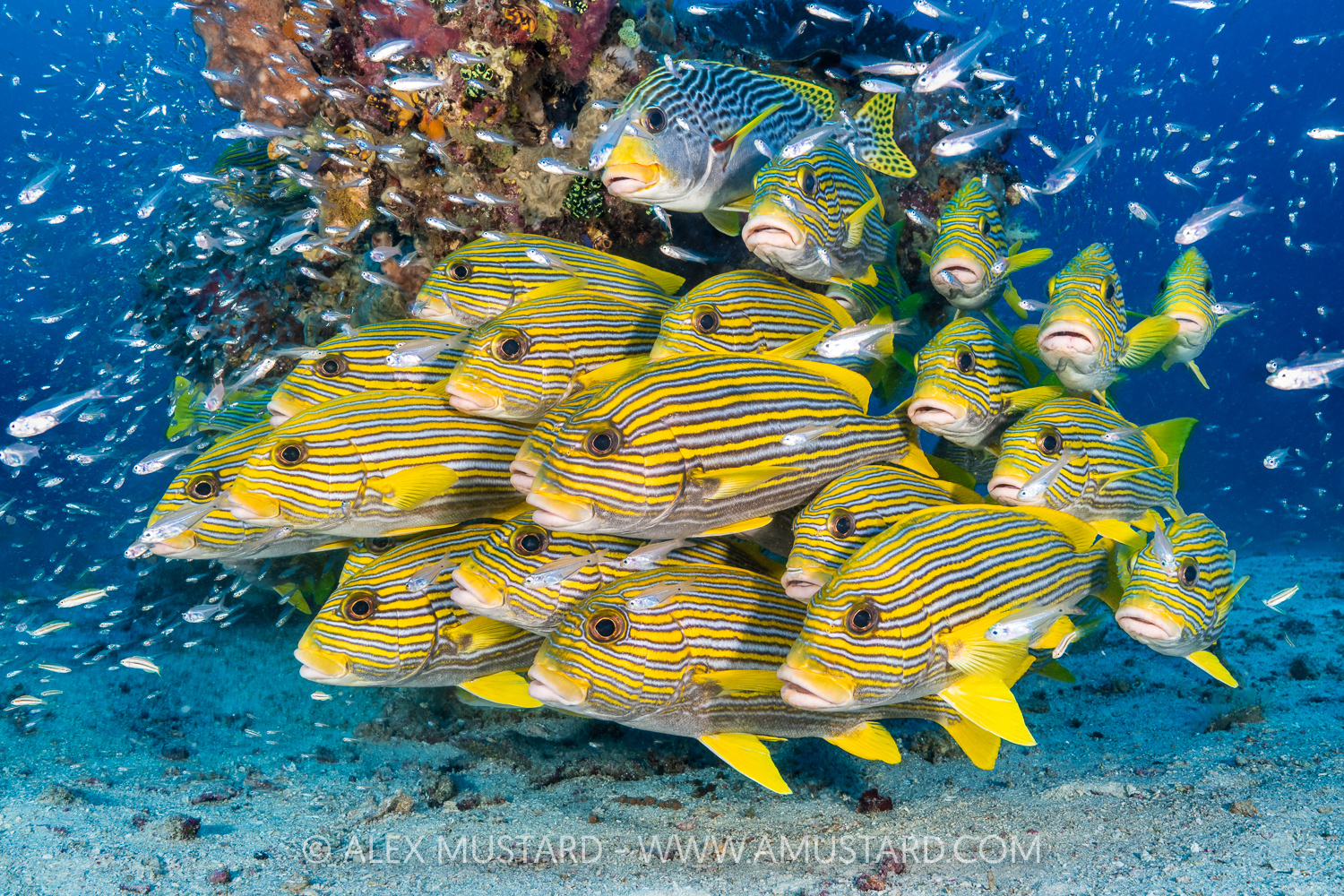
The OPP is well balanced in the water and easy to shoot.
Matthew Sullivan and Alex Mustard chat about the OPP on the Underwater Photography Show. The video contains lots of clips of Alex shooting with the OPP (filmed by Don), from 02:30 mins.
The OPP gives exactly the same view as using the 16-35mm behind a dome port. But it definitely delivers on image quality across the frame. And I believe that edge of frame quality is particular important with a rectilinear lens. This is because while fisheye lenses project a picture that emphasises the central area of the picture, rectilinear wide angles project an image that puts more emphasis on the corners of the frame.
In the central area of the frame, I don’t believe the OPP is any different from using a dome. It is sharp and detailed, as I would expect the 16-35mm to be behind a dome.
Where the OPP excels is that it maintains very impressive quality right out across the frame. The image quality right in the corner isn’t perfect, but I feel it is a good as you would expect the 16-35mm to deliver with a similar composition on land. When the aperture is opened up, even as far as f/5, only the very extreme corner of the frame shows any softening – and the image as a whole is excellent (see below). This is very impressive, greatly exceeding what a dome port would produce in my experience.
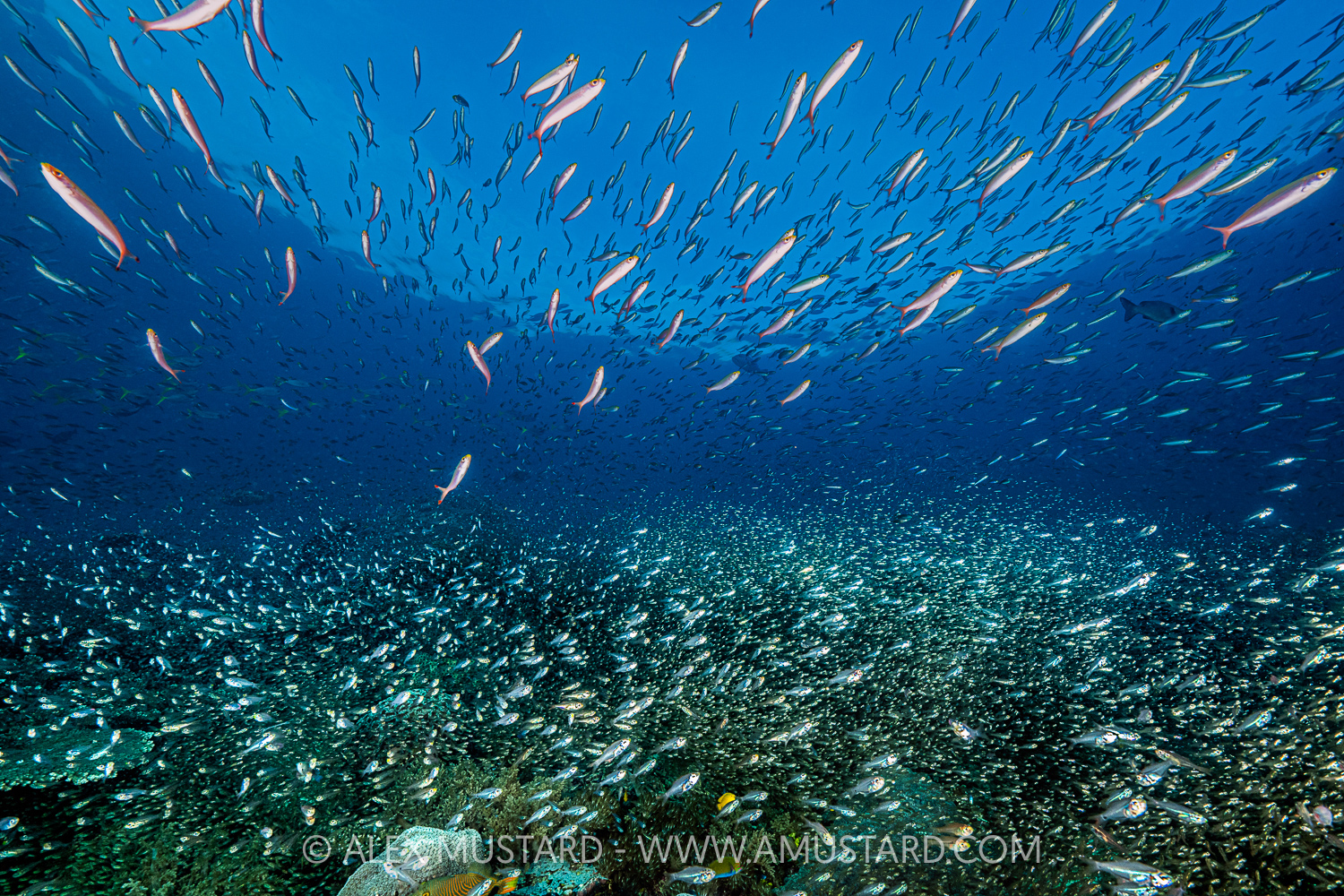
Rectilinear lenses, like the 16-35mm, emphasise the edges of the frame more that fisheyes, so corner sharpness is arguably more critical.
The OPP and 16-35mm deliver excellent detail. Put mouse over image to see crop.
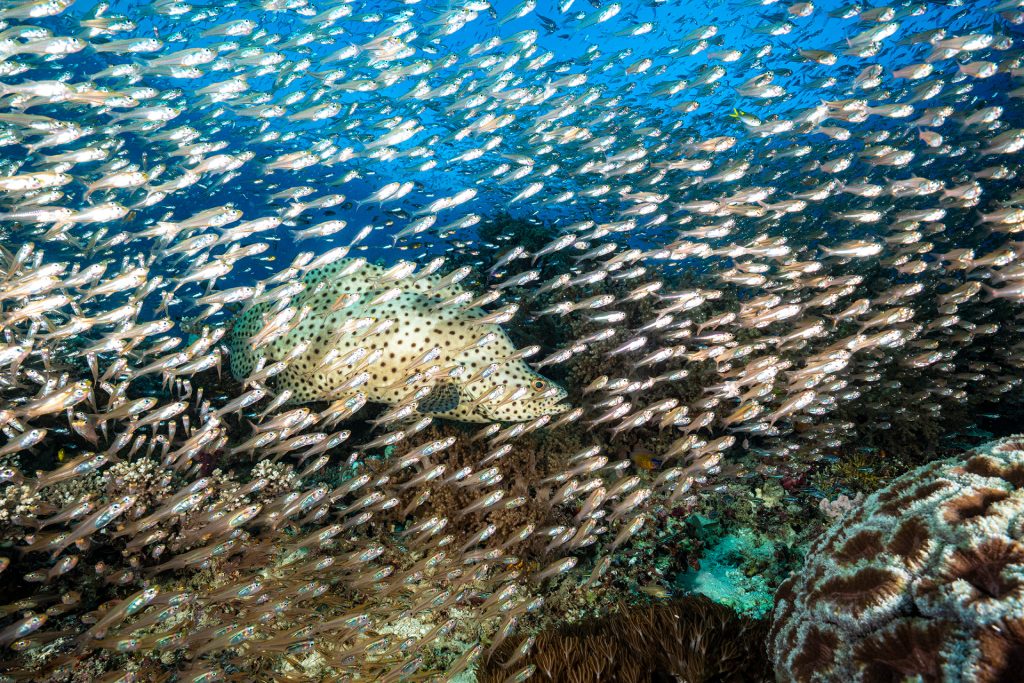
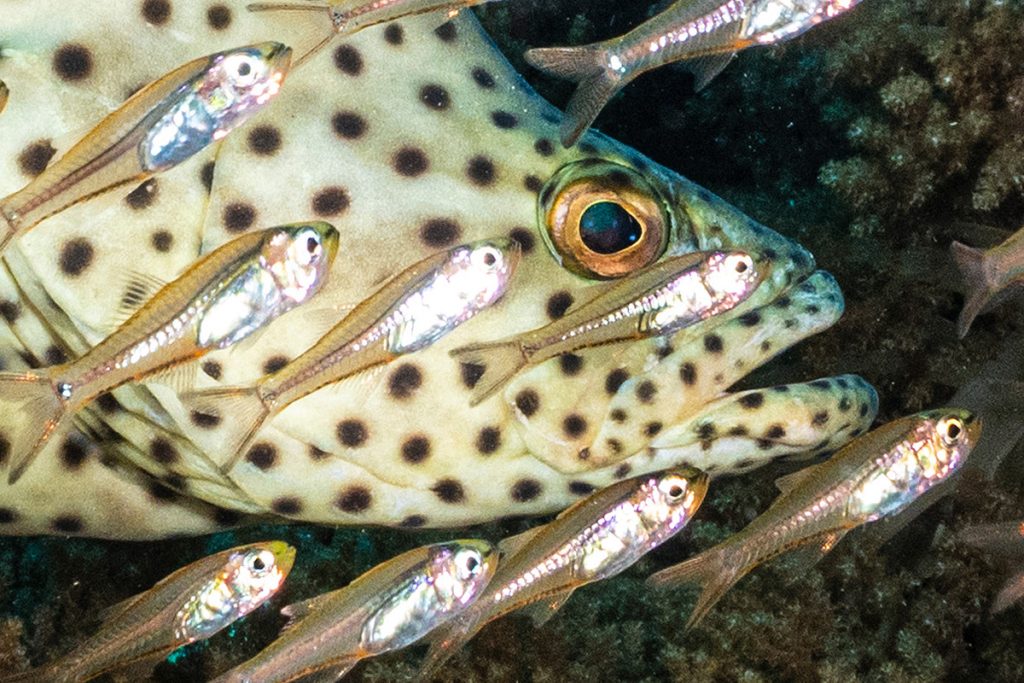
Below are a series of test images to show edge/corner of frame sharpness at different apertures. The crops are the important ones for seeing edge of frame sharpness. The first two compare the scene shot at f/13 to f/7.1 (below)
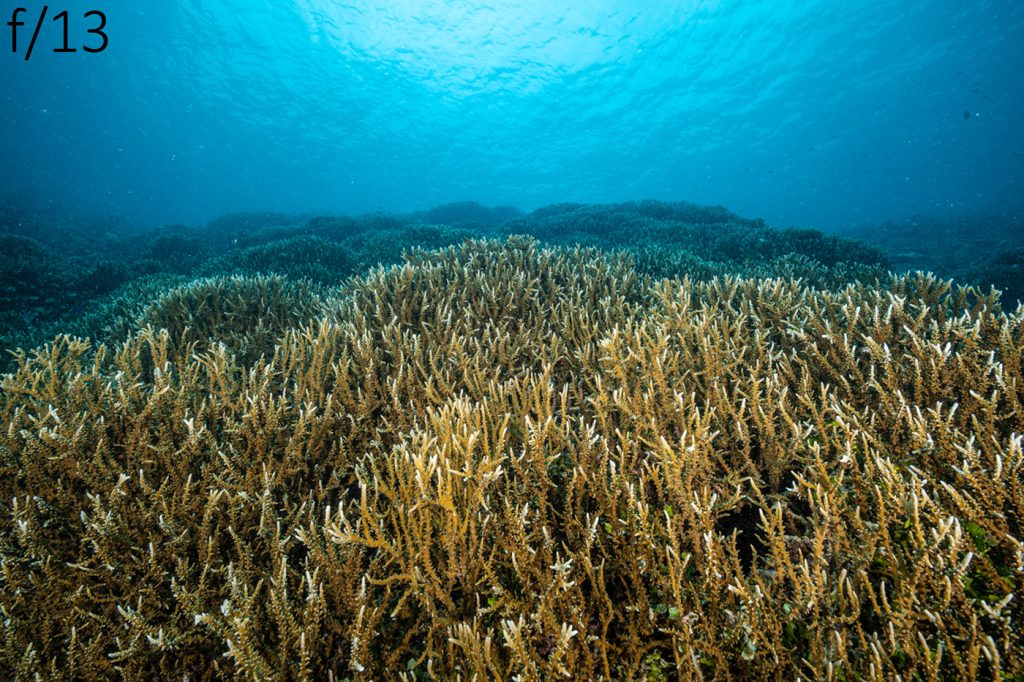
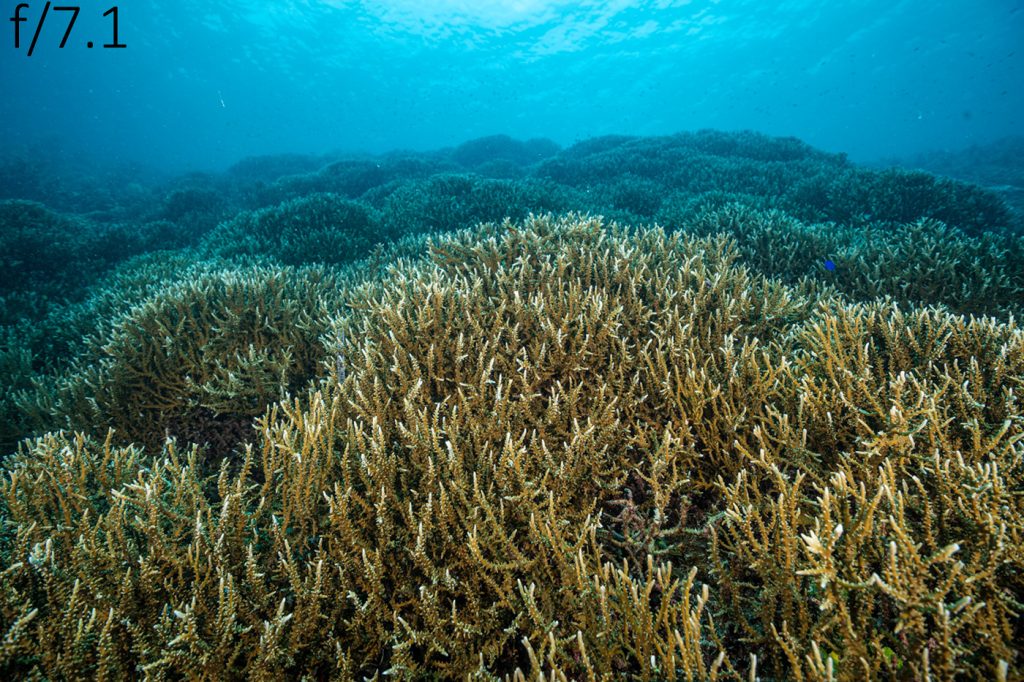
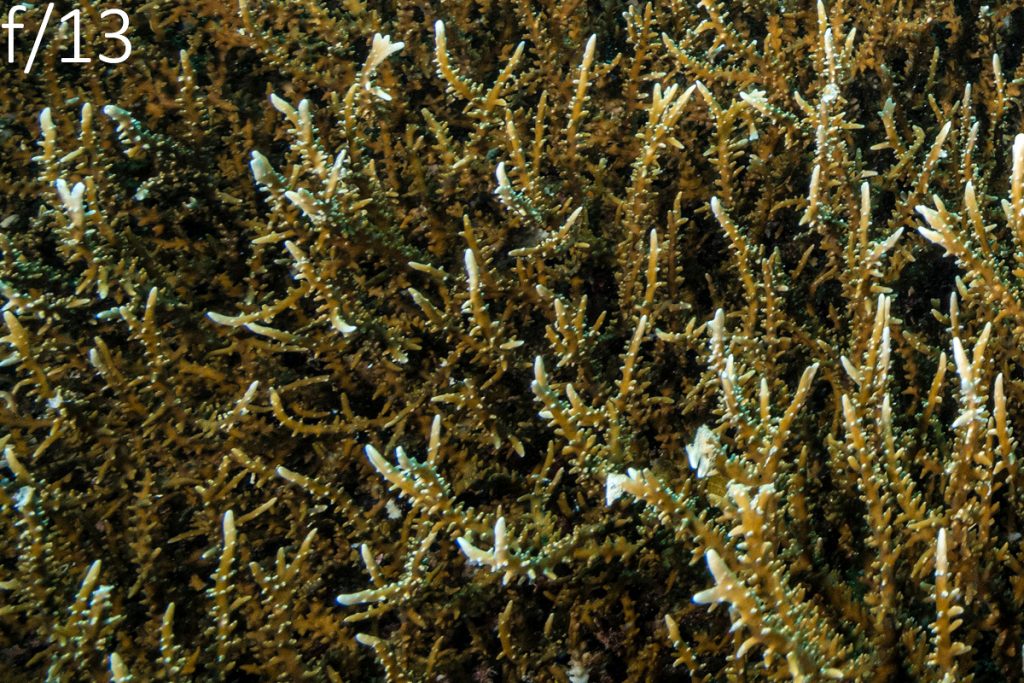
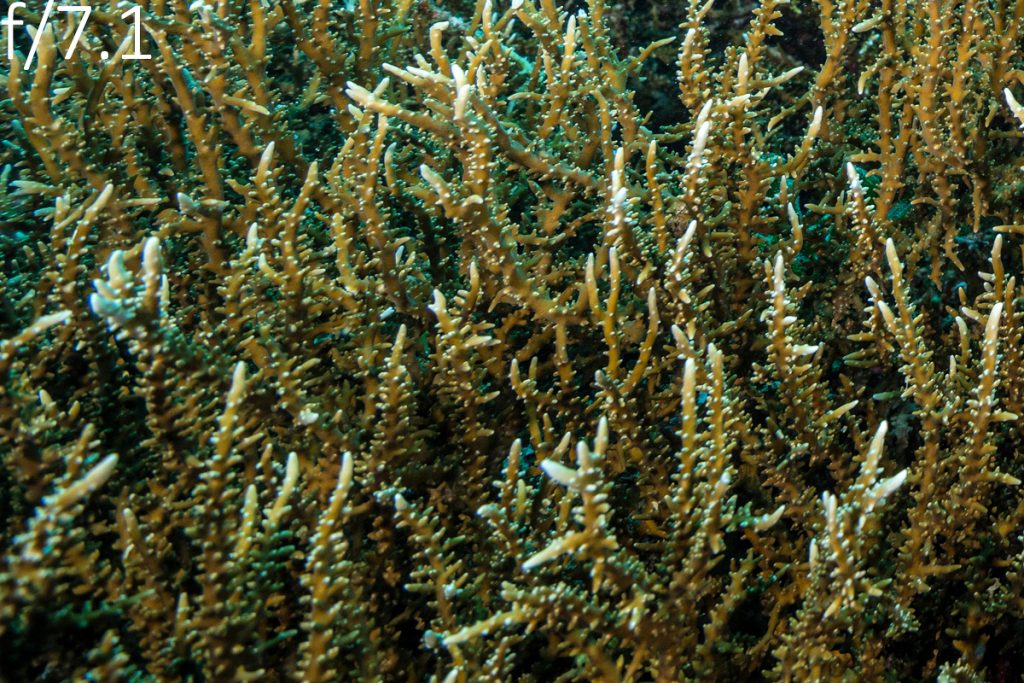
Two more comparison images, this time f/13 to f/5 (below). Again the cropped images are more instructive on edge of frame optical performance.
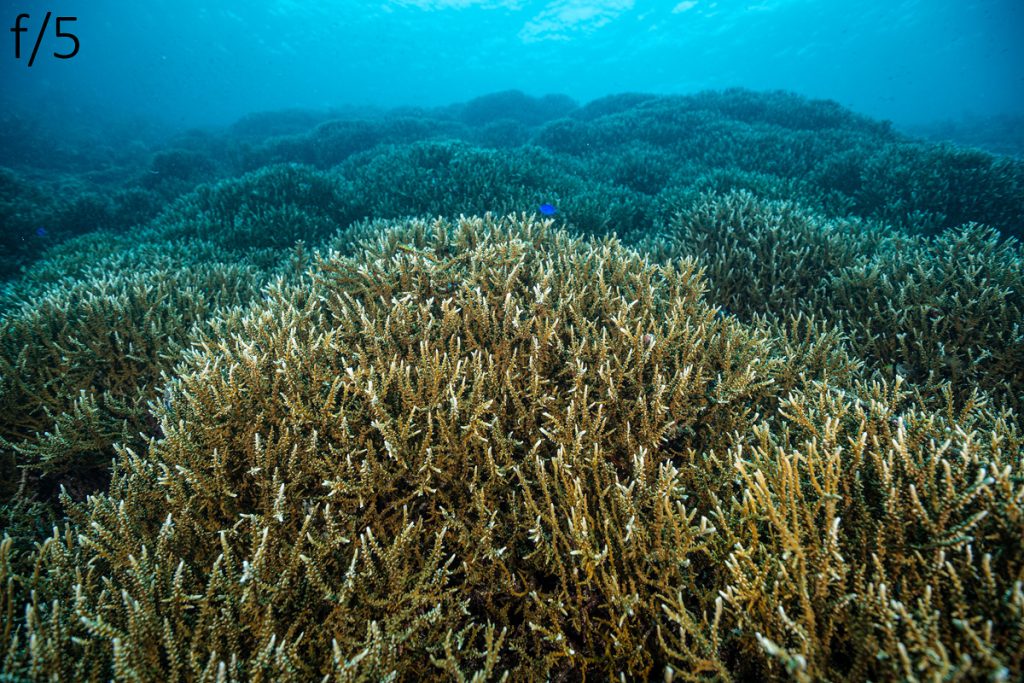
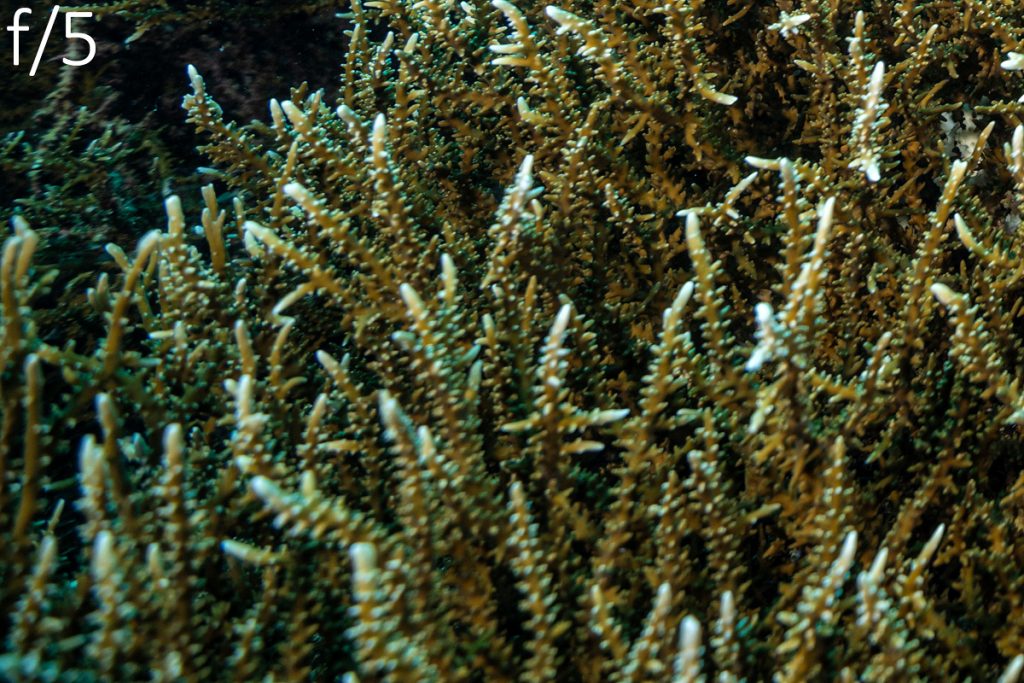
The OPP is very impressive at open apertures. But it is also important to stress that we typically use a closed aperture to shoot wide angle underwater for more reasons than helping corner sharpness with dome ports. The majority of wide angle photos are scenic images, where both the foreground and background are important parts of the composition and, like a hyperfocal landscape photo, all elements should ideally be in focus. In wide angle shooting we achieve this by closing the aperture. How much depends on the sensor size and how close our foreground subject is. You can see in the examples above how the background drops out of focus at more open apertures.
If you are a full frame photographer, then you may shoot as open as f/8 for more distant subjects (like pelagics), f/11 for medium range subjects (fish schools), f/13 for reef scenery and f/16 for close focus wide angle, to keep foregrounds and backgrounds in focus. If most of your wide angle shooting is in the f/11-f/16 range, then the OPP’s strength will be less obvious in your images. However, if you shoot a lot of pelagics, or in deeper/darker environments (wrecks, deep reefs, cenotes etc etc) where you need to sacrifice the hyperfocal look simply because of a lack of light, then the OPP will be a highly valuable ally. And it would also be ideal for adding open aperture wide angle shots to your portfolio.
I didn’t do back to back tests against a dome port, but those of you in the market for the OPP will likely already have a 16-35mm and dome and a feeling of where they are and are not happy with the performance. Furthermore, the crux of whether you will buy the OPP will depend on how you personally value the improvement over what you currently get. Some will see the OPP as a must have, a lens that gives them the best possible 16-35mm underwater, with image quality gains (sometimes big, sometimes small) in every image they take. Others will see the OPP as an unjustifiable expense, being totally content with the 16-35mm behind their dome. In addition, the value of OPP will also depend on how much you shoot with the 16-35mm compared to other wide angle options.
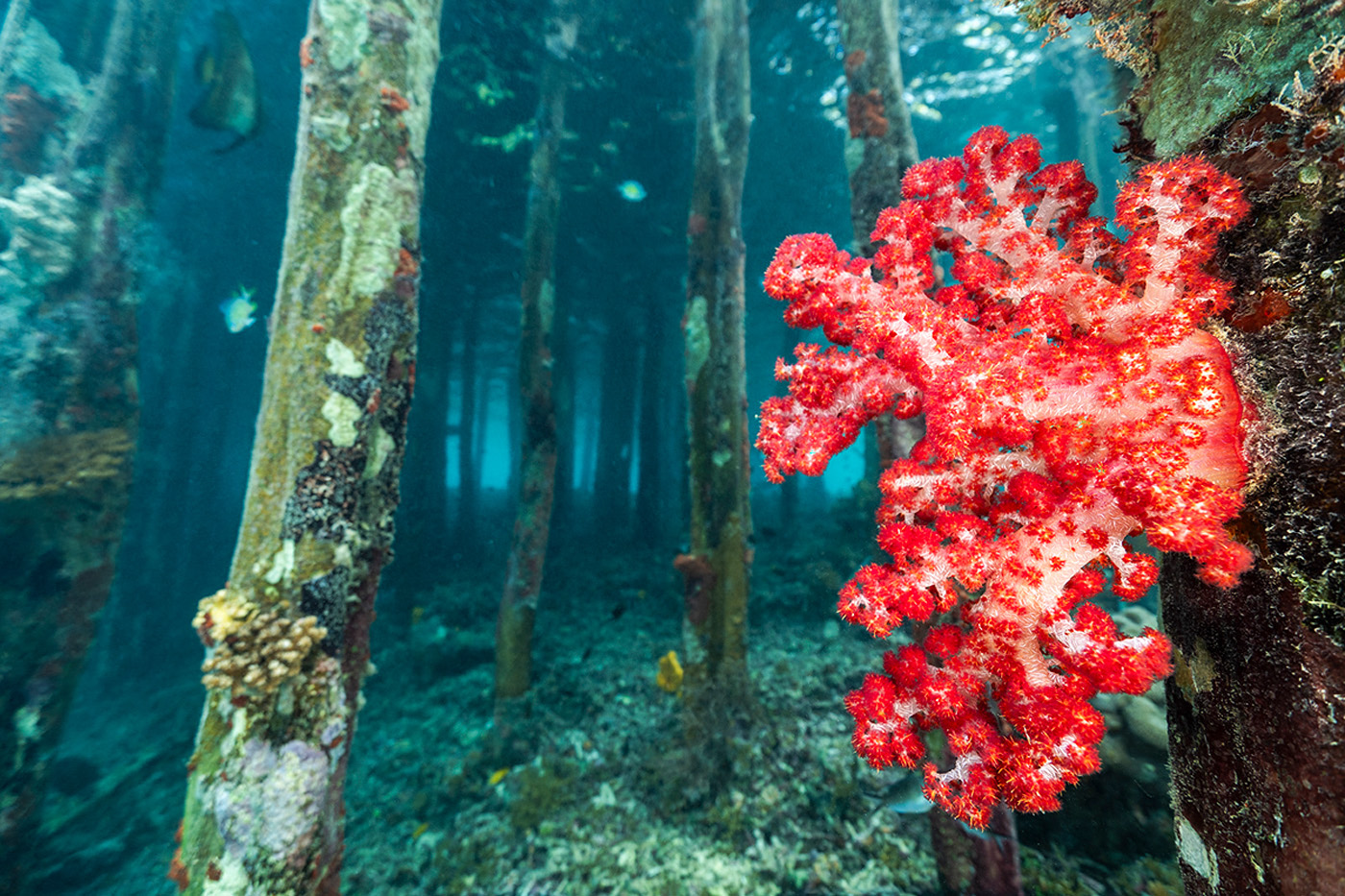
The OPP allows open aperture shooting, even with subjects at the edge of frame. 1/50th @ f/4, ISO 125.
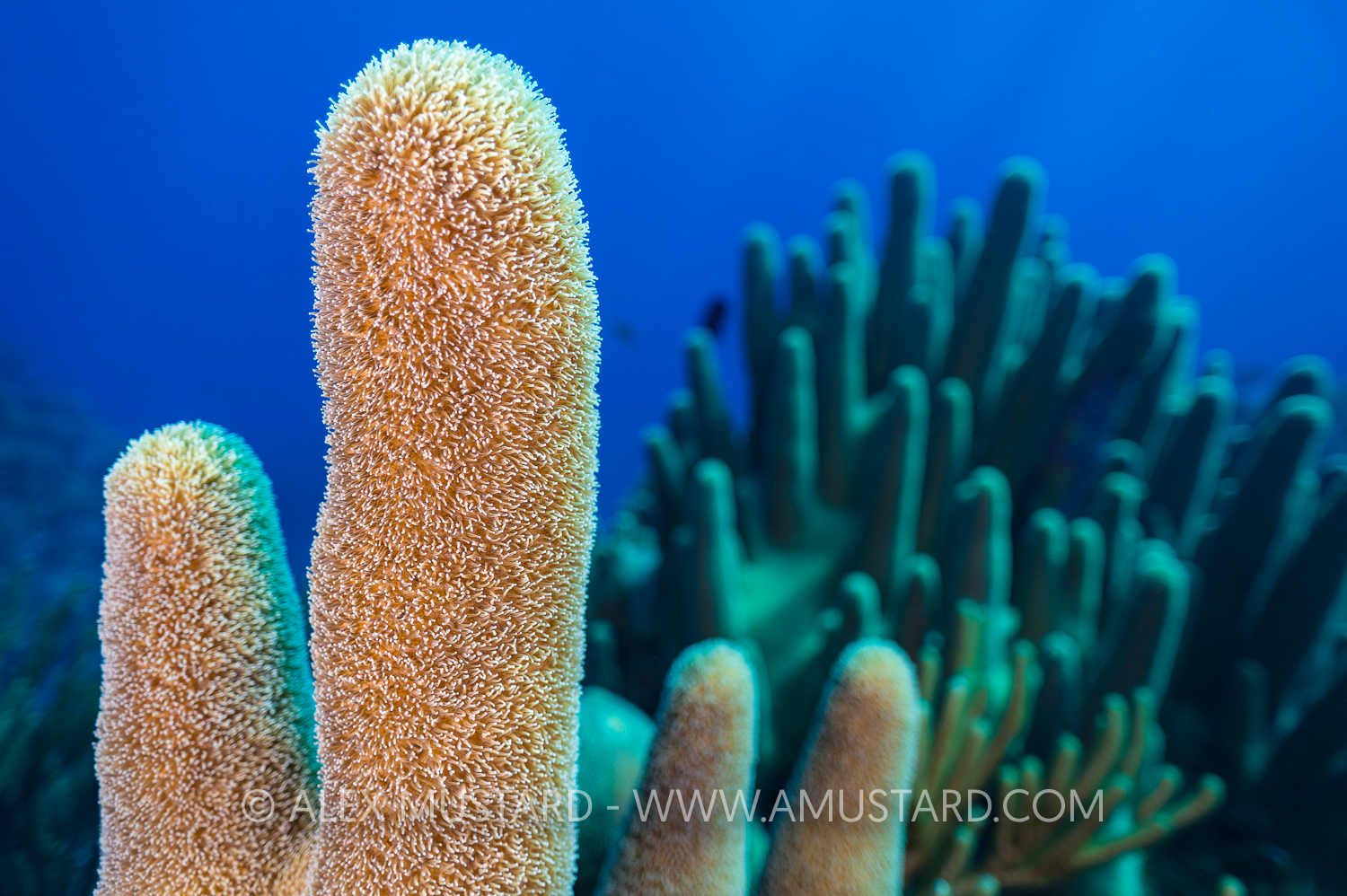
An image shot at f/2.8 with my Zeiss Ivanoff and Nikon 20mm (the 16-36mm has a maximum aperture of f/4).
“some will see the OPP as a must have, a lens that gives them the best possible 16-35mm underwater. Others will see the OPP as an unjustifiable expense…”
So far we’ve considered the OPP in terms of its performance relative to dome ports. But, there are already plenty of other underwater corrected optics in the sea, especially those made by Nauticam.
Nauticam’s WACP-2 is perhaps closest to the OPP being predominantly rectilinear in look. It is the biggest, most expensive (Backscatter list it for USD $11K, Onderwaterhuis list it for Euros 8.7K) and least commonly seen of Nauticam’s optics. And it is different from the OPP because despite its mostly rectilinear look, it significantly increases the field of view of your wide angle lens. I’ve shot it mostly with the Nikon Z 14-30mm, where is offers a massive 140˚coverage, compared with 107˚maximum of the 16-35mm with the OPP. However, the sheer size of the WACP-2 means that few people can travel with one (I’ve only had 3 turn up on my workshops), but I did see that Seacam Ambassador Laurent Ballesta shoots with one – as Seacam themselves shared a picture of him using it on their social media earlier this year! Ultimately the WACP-2 is more than twice the weight and towards twice the price of the OPP.
The WACP-1 is USD $4.8K (Backscatter) and Euros 4.4K (Onderwaterhuis) and clearly a direct competitor to the OPP on price, angle of view, open aperture performance and across the frame image quality. The 16-35mm with OPP has a field of view (FoV) range of 107-63˚, which is beaten by the WACP-1, which gives a FoV of 130-59˚with the old Nikon 28-70mm and 130-81˚with the newer 24-50mm. However, despite being a bit cheaper, the WACP-1 is about 1 kg heavier and bulkier to pack than the OPP.
Nauticam fans would counter by pointing out that Nauticam offer a range of smaller lighter options, such as WACP-C and the WWL series, which offer the same FoV as the WACP-1 with smaller, cheaper optics, and with a small drop in image quality. I especially like the WWL-C on the Z8, which is USD $1.3K and Euros 1.1K and weighs just 1 kg. Nauticam also make the FCP lens, which is the ultimate for flexibility, with a FoV range with the 24-50mm of 170-87˚, but doesn’t quite match the WACP-1 and OPP for image quality right across the frame.
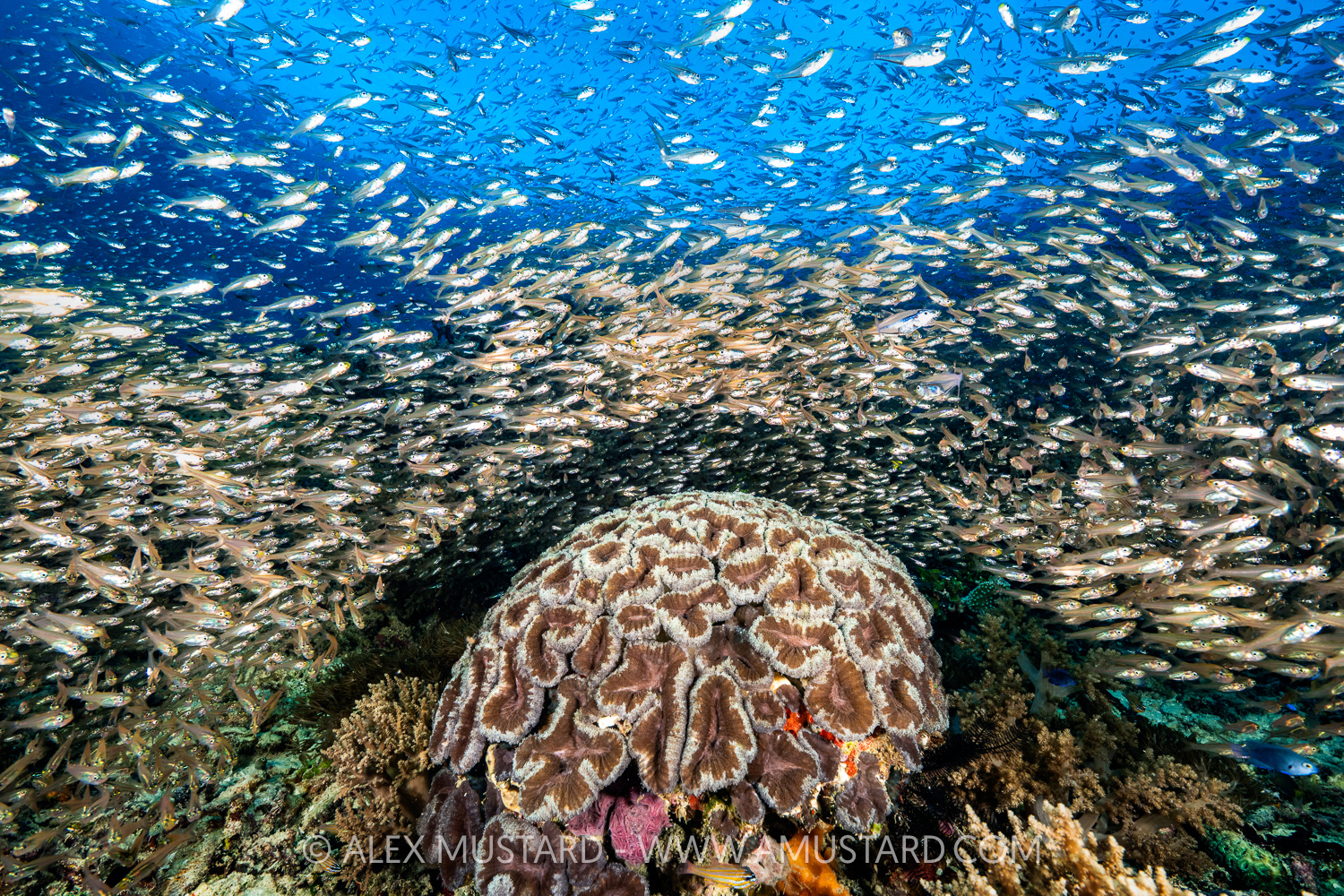
The OPP and 16-35mm has a rectilinear look, but a Field of View range that overlaps with the wide Nauticam optics.
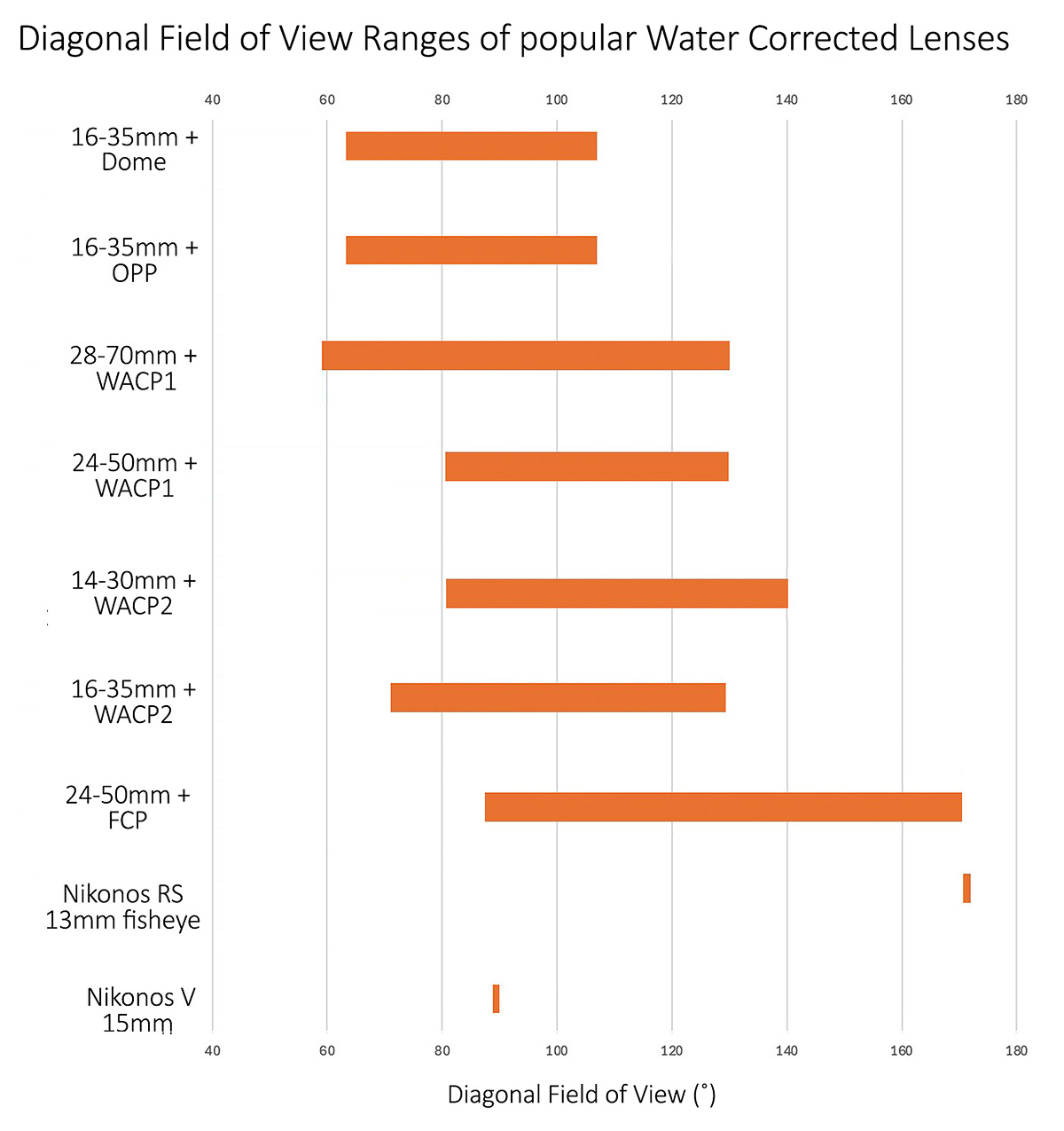
A graph showing the diagonal Field of View (FoV) ranges for water corrected Nikon lens options
“The OPP is a great new addition to our choice of water corrected lenses, offering a unique option at a reasonable size, weight and price for the high-end market that it is intended”
The OPP is a great new addition to the underwater photographer’s choice of water corrected lenses, offering a unique option at a reasonable size, weight and price for the high-end market that it is intended. It would require a custom port adapter to work on non-Seacam housings, but these are easy to source.
I’d wager it is the best quality Ivanoff-Corrector ever produced and delivers excellent image quality across the frame, with a large performance advantage over a dome port in this regard at apertures f/8 and wider. At present it only works with the Nikon F 16-35mm, but I would expect similar lenses from Sony and Canon to be supported officially soon, possibly with different Correction lenses. But it will certainly remain incompatible with lots of other wide angle optics.
It will appeal particularly to photographers who prefer the rectilinear look and are already dedicated 16-35mm shooters. It will show its strengths best when shooting pelagic animals and action, caves and in other low ambient light conditions, where the advantage of the optics in more open aperture shooting will be more telling. I can also see it appealing strongly to pool photographers, working with models and covering sports. If you are already satisfied with how the 16-35mm performs in all situations with your dome, then the extra expense won’t be appealing.
The OPP covers a very similar range of subjects, with similar across the frame image quality, over a wide a range of apertures, to Nauticam’s WACP-1 (and WACP-C and the WWL family of lenses). The Nauticam lenses are wider and have a mild fisheye look, but given the amount of overlap in optical quality and field of view, owning both would be hard to justify.
Overall, I really enjoyed shooting the OPP, was very impressed with its performance, size, handling and versatility. And as a Sony shooter currently, I am awaiting news on its compatibility with Sony lenses.
Alex Mustard. Written April 2026.
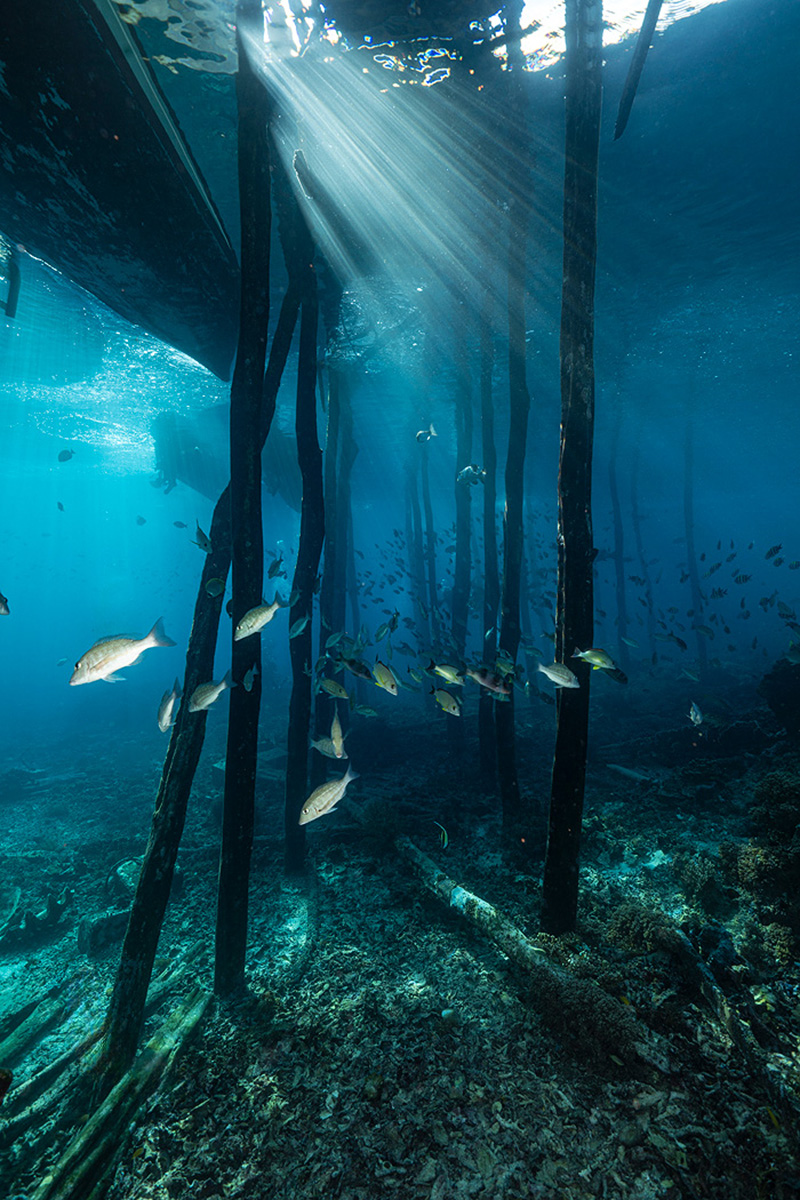
The OPP and 16-35mm give a distinctly rectilinear look, which differentiates them from all the Nauticam optics, apart from the heavyweight WACP-2.


