FULLY BOOKED. For waiting list spaces please contact Caroline@scubatravel.com.
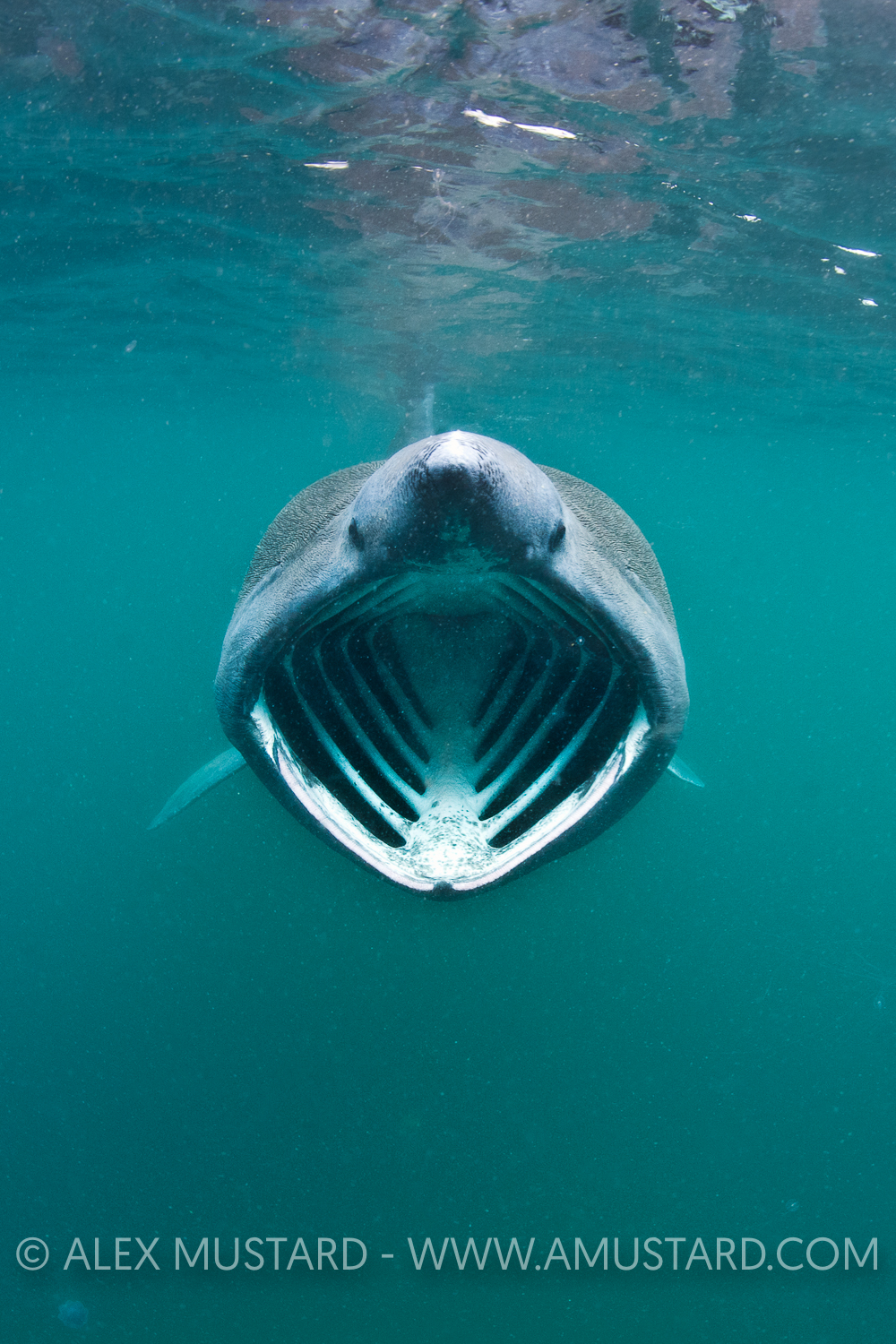
Basking sharks are one of the ocean’s star creatures: huge, prehistoric-looking, and most enticingly, rarely photographed. Alex has many well-known images of the world’s second-biggest fish, but he’s keen to stress that this is a species that is always hard to get in front of. “The challenge is really getting the right conditions,” explains Alex, “there are usually good numbers of baskers off the west coast islands of Scotland each summer, but until you need the right weather and plankton conditions for them to be found feeding at the surface. Unlike whales that need to come up to breathe, basking sharks only come to the surface when calm conditions see their planktonic food aggregating there. Only then can we spot them and only then get our shots. In short, this is an adventurous trip for those willing to play those odds. 2021 was very quiet year for sharks and we didn’t see any on our trip (you need to be prepared this can happen), but that didn’t mean the trip was unproductive. Have a look through some my photos from this location to get an idea of the photo opportunities. ”
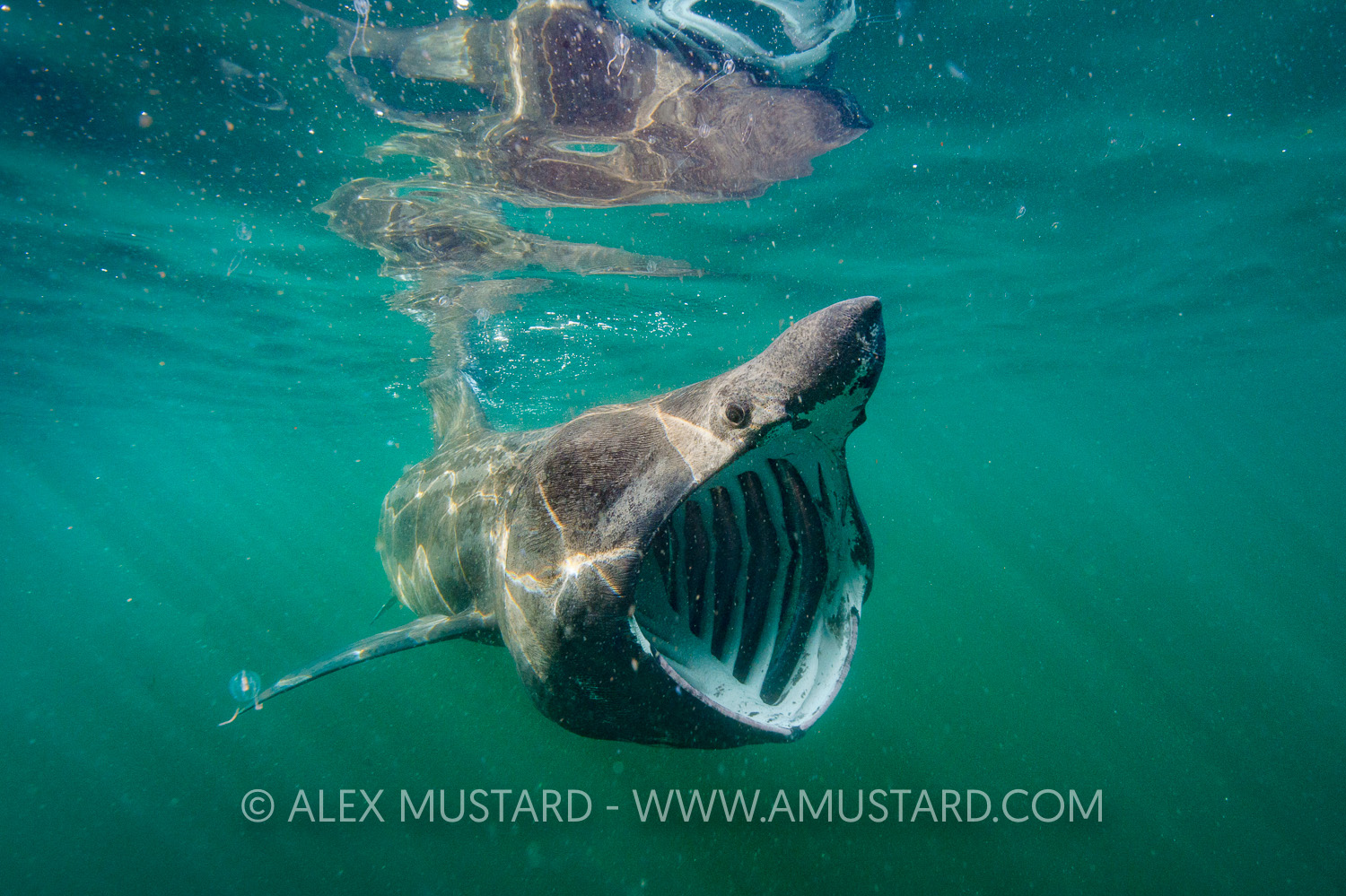
This workshop will be based on the beautiful and wild Island of Coll, and work with the experts at Basking Shark Scotland, the world’s most experienced naturalists with the species. This is a remote destination, even for those who live in the UK, but Scuba Travel has put together a variety of packages, most people go for Oban to Oban via foot-passenger ferry, but Glasgow Airport-Glasgow airport via mini-bus pickup can be arranged. This is a snorkelling only trip and strobes should not be used with the sharks, but can use useful with other subject. The trip is running significantly reduced numbers to maximize each photographer’s time in the water and space on the boat. The workshop is limited to just 7 photographers and Alex (Basking Shark Scotland’s other boats have 12). The workshop will focus on the techniques of shooting the sharks and any other subjects we focus on underwater (seals, seaweed gardens, jellyfish, coast scenery etc).
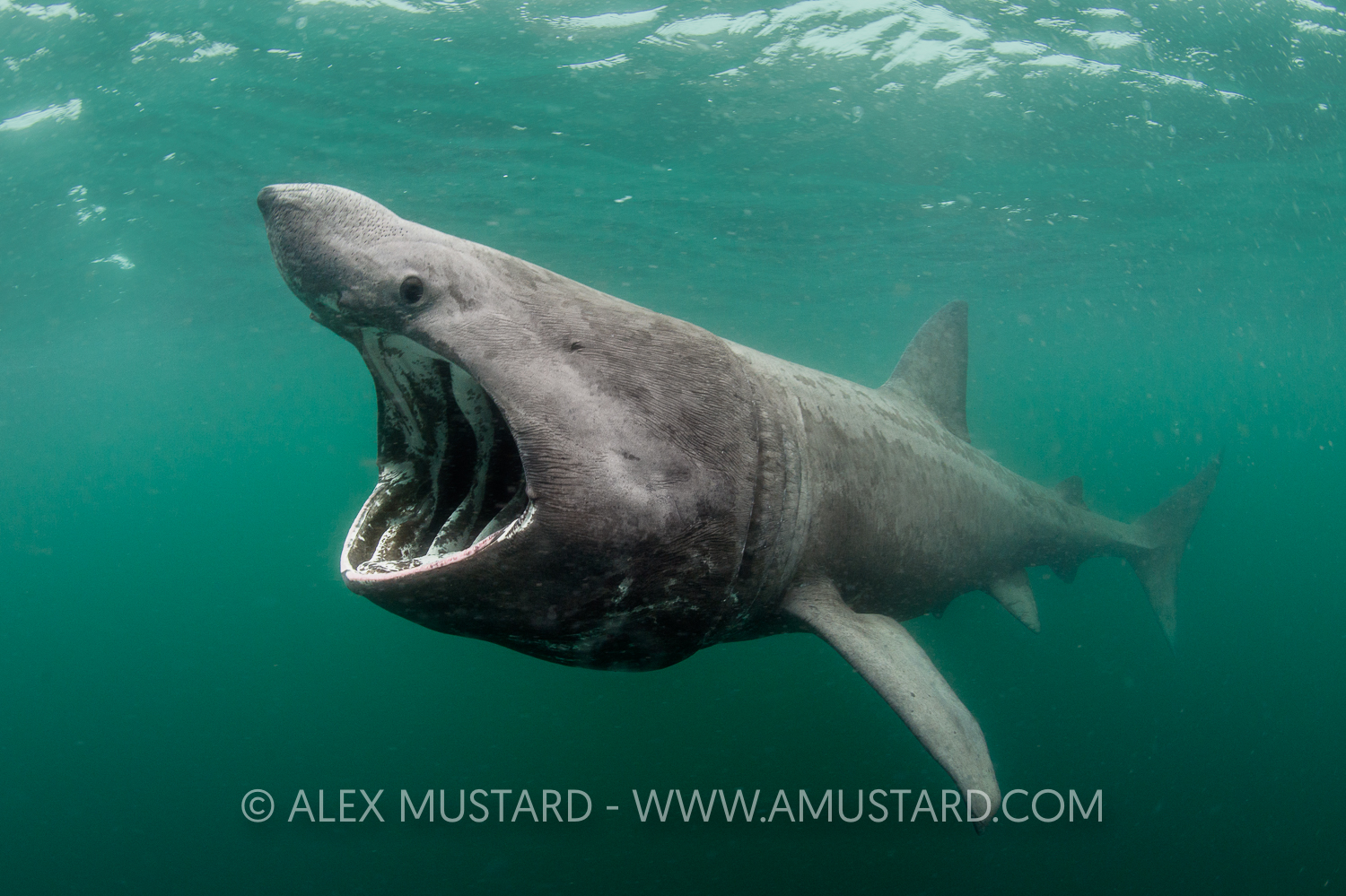
“The good news,” continues Alex, “is that while basking sharks are hard to find, they are reasonably easy to shoot with the right lens and settings! When feeding they swim slowly and often very predictably in straight lines or circles. The trick is to spread out a little and pick a spot in front of them and then stay dead still, floating on the surface, so they can’t see or sense you. Swim towards them and they will close that cavernous, iconic mouth, or even turn away. Too many photographers struggle to get THE shot in mixed groups because everyone in the water keeps swimming to try and get in the prime position. The key to getting great images is having a group where everyone works together, understanding the value of everyone keeping still to keep the sharks relaxed for the best shots.”
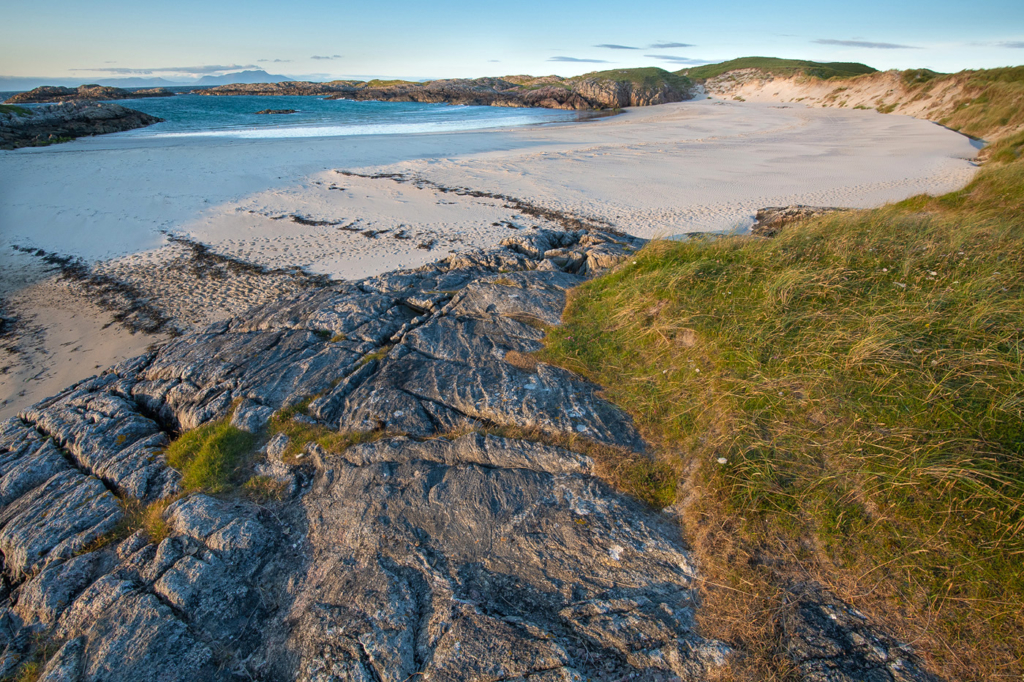
The other good news is that this is an incredible part of the ocean, with underwater and topside photo opportunities even when the sharks prove elusive. It is a famous area for sea birds (bring binoculars and a medium telephoto), grey and common seals, and loads of cetaceans, particularly minke whales, large numbers of common dolphins, and, occasionally, humpback whales (see the video below, from Basking Shark Scotland in 2020 – this is rare!). It is a great location for drone photography, landscape photography, topside wildlife photography and star photography.
Alex adds “many photographers are used to big animal trips in the tropics that can almost 100% guarantee the creatures. Basking sharks are harder and the conditions are tough too (which is why the photos are so much more precious), so please consider this before signing up. This trip usually involves long days at sea. The water is cool and this region always has mixed weather! The focus of this trip will be basking sharks, we need to put in the time to get the shots, but I’d expect us to try some seal photography (while snorkelling) and some other subjects, as well.
The workshop element of this trip will focus both on how to have the best encounters with sharks for photos and also the best photographic techniques with this species. It will cover other subjects if and when we focus on them. “Expecting long days at sea, there will be less classroom time on this workshop and we will do most of the teaching on the boat, the evenings will provide a chance for informal sharing of images between the small group, but often evenings are best spent recharging the batteries for another day at sea.”
VITALS
Dates: 15th July-23rd July 2022 (Oban, Scotland-Oban, Scotland)
Costs: £3150 GBP per person – excluding Coll accommodation (because of the two option). Includes 7 days of basking shark hunting (one more day than last year), Alex Mustard workshop, ferry from Oban to Coll (foot passenger ticket), 1 night Oban hotel at the start of the trip.
To make this trip suitable for photographers both from the UK and overseas, Scuba Travel have put together a variety of packages. Furthermore, with limited accommodation on the small island of Coll, the group will be split across different accommodation options. Caroline will explain the best options for you when you contact her (also see details below).
A Glasgow Airport-Glasgow Airport itinerary will suit those from overseas, which adds approx £200 GBP to the price for the return transfer (exact price depends on numbers taking this option, thus sharing the transfer costs).
Accommodation on Coll: speak to Caroline when booking. We have reserved space for the whole group in the Tigh na Mara B&B directly opposite Basking Shark Scotland’s jetty in Arinagour (approx £700-850).
A more luxurious option is Coll Hotel in Arinagour on a B&B basis (approx £1200-1300 per room). About 500m from the jetty. This must be booked direct with the hotel.
Alex adds “Which ever accommodation you book, we will plan to eat and socialise together in the evenings, usually at the Coll Hotel, which is also the island’s pub!”
Various cottage options are also available, outside of Arinagour (Coll). These are from around £800 per week. Most will require taking a car to Coll, so are more suited to UK based photographers.
BOOKINGS
For booking and further information please contact Caroline@scubatravel.com. A deposit of £1575 is required to hold your space on the workshop, plus 50% of the accommodation cost. Caroline says, “There will only be 7 spaces on this trip, and so I do ask – to be fair to others – do not request spaces speculatively.” Balance due 6 months before travel.